Let’s talk about something that doesn’t make headlines, but absolutely should.
In a world where digital memory is constantly being rewritten, deleted, or manipulated, there’s one corner of the internet that’s been quietly fighting for the most punk rock cause of all—preserving history exactly as it was.
It’s called the Internet Archive. And if you’ve never heard of it, you’re about to understand why it’s one of the most important digital tools for truth, transparency, and cultural preservation on the planet.
This isn’t just a tech project. It’s a rebellion against the erasure of reality. It’s the counterculture of data. It’s the library the establishment doesn’t want you to know about.
Let me break it down.
What Is the Internet Archive?
At its core, the Internet Archive is a nonprofit digital library. It was launched back in 1996 by Brewster Kahle, a technologist with a radical idea—that everything on the internet should be saved, just like books in a library.
Why? Because the web is fragile. Pages disappear. Articles get pulled. Governments and corporations rewrite or delete content when it becomes inconvenient. History gets “updated” to suit current narratives.
The Internet Archive says no to all that. It captures websites, documents, images, audio, and video from all over the world and stores them in a massive, publicly accessible digital vault. Anyone can access it. No paywalls. No filters. No algorithm telling you what to see.
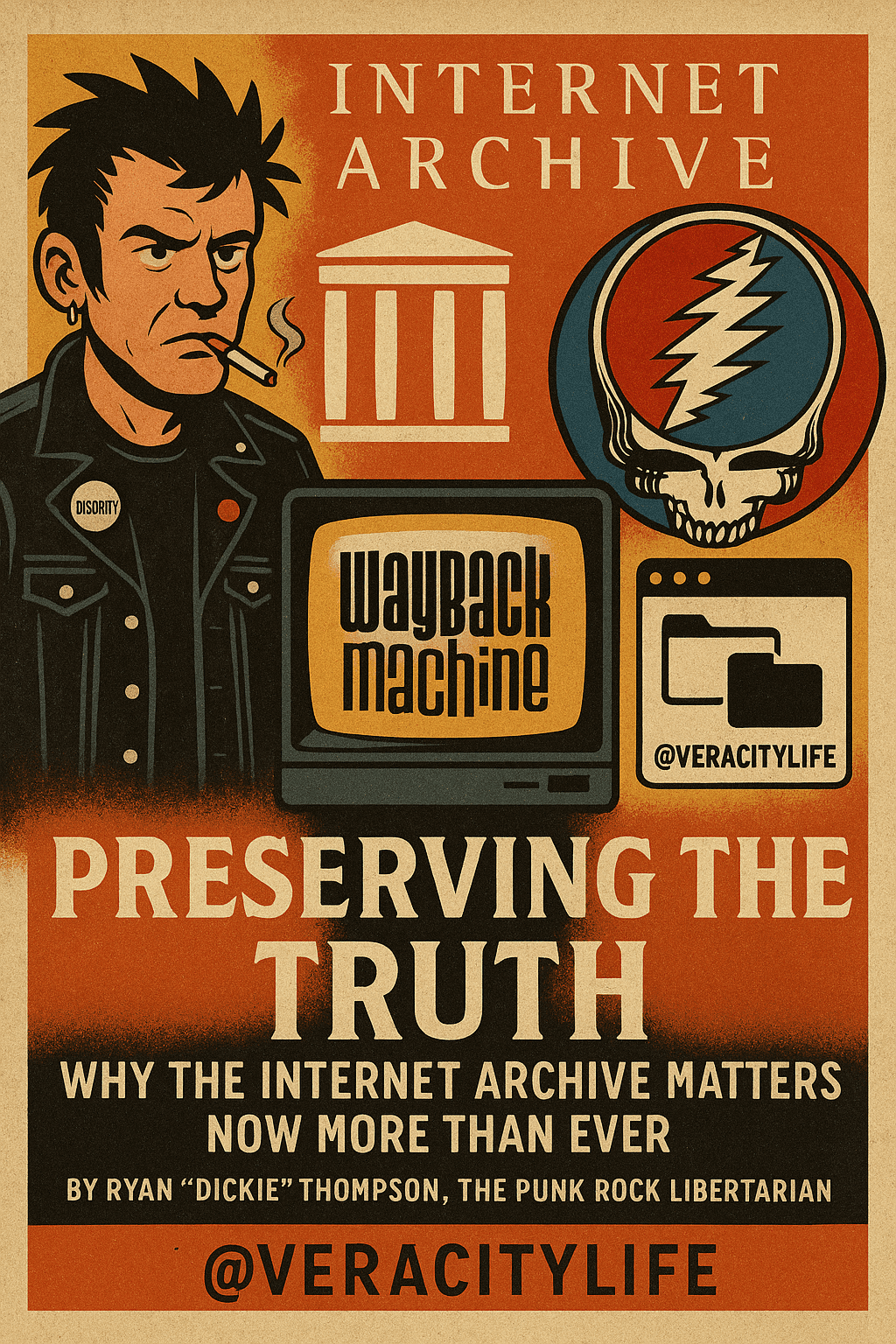
Its most famous feature is called The Wayback Machine. Think of it like a time machine for the internet. You can type in almost any website and see what it looked like in the past. Whether it’s CNN in 2003, a deleted government report, or your old blog from college, it’s probably been saved there.
The Archive hosts over 866 billion web pages, millions of books and texts, over 14 million audio recordings, and more than 4 million videos. It’s basically the Library of Alexandria for the internet age, but this time, we’re not letting it burn.
Why It’s More Than Just a Geek’s Playground
You might be thinking, “That sounds cool, but why should I care?”
Because we live in an era of digital gaslighting. Stories get memory-holed. Politicians say one thing and pretend they didn’t. Tech companies rewrite their terms of service. Media outlets update headlines without transparency. Every day, we see facts get reshaped in real-time.
If you're someone who values truth, liberty, and accountability, then the Internet Archive is a lifeline. It gives you the receipts. It’s how you prove what was said, what was promised, and what was quietly deleted.
In punk terms: it’s the bootleg tape that exposes the lies.
The Soundtrack of Resistance: The Grateful Dead Archive
Now here’s something even cooler.
The Internet Archive isn’t just about websites and documents. It also hosts one of the most legendary collections of live music in existence—The Grateful Dead Archive.
The Dead were pioneers in more ways than one. Long before Spotify and YouTube, they embraced taping culture. They let fans record and share their live shows freely, which built a loyal, decentralized fan base long before that was cool. They understood that music wasn’t just a product—it was a cultural artifact.
Thanks to the Archive, you can now stream thousands of Grateful Dead concerts, dating back to the 1960s. High-quality, lossless audio recordings. Setlists. Fan reviews. All preserved and free.
You want to hear Jerry Garcia jam for 18 minutes on “Eyes of the World” in 1974? It’s there. Want to listen to an audience-recorded set from Red Rocks in 1982? It’s there too.
The Grateful Dead archive is more than a music collection. It’s a living example of cultural freedom. A direct connection to a time when the counterculture was about community, not corporate branding.
And it’s a blueprint for how art should be preserved and shared.
Our Story: Veracity Life on the Archive
Here at Veracity Life and Disruptarian, we take transparency seriously. So we practice what we preach.
Our own content—archived, timestamped, and fully public—lives right on the Internet Archive. You can check it out here:
👉 https://archive.org/details/@veracitylife/web-archive
Every article, podcast episode, blog post, and snapshot we upload becomes part of the permanent record. We don’t believe in hiding the past or quietly “updating” our stance to fit current trends. That’s what the media and political establishment do. We do the opposite.
The goal is simple: veracity means truth. If we say something, we stand by it. If we get something wrong, we correct it publicly. The Archive holds us accountable—and we love that.
By using the Internet Archive, we give our audience a transparent, auditable history of what we’ve said and published. You can track our evolution. You can dig into past reports. You can see how our content has stood the test of time.
This isn’t just good for us—it’s good for you. It empowers readers, listeners, and viewers to think critically and make their own decisions without relying on corporate filters or social media algorithms.
Censorship and the Fight to Preserve Memory
Of course, not everyone loves the Internet Archive. In fact, it’s been under legal attack for years.
Major publishers have sued the Archive for preserving digital books. Copyright trolls have come after it. Even government entities have tried to pressure the platform. Why? Because power hates accountability. The more access the public has to the truth, the harder it is to control the narrative.
This is why the Archive matters so much right now. As censorship grows and digital freedom shrinks, the ability to access uncensored history becomes essential. It’s not just about nostalgia. It’s about defending the record.
The Archive isn't perfect, but it’s one of the last truly open corners of the internet. And if we let it fall, we lose one of the best tools for preserving free thought in the digital age.
Final Thoughts
If you're someone who values liberty, truth, and open access to information, the Internet Archive is your ally. It’s not flashy. It doesn’t have influencers or viral trends. But it’s doing the kind of work that actually matters.
It preserves culture without permission. It saves facts without filters. It gives power back to the people, not the platforms.
So the next time you want to revisit a deleted article, research a historical moment, or stream a legendary live concert, remember there’s a place where that’s still possible.
And if you’re a content creator, journalist, musician, or everyday truth-seeker—use it. Contribute. Archive your own work. Be part of the movement.
Because in the battle for truth, memory is resistance.
Ryan “Dickie” Thompson is the Punk Rock Libertarian behind Disruptarian.com and Veracity Life. He archives his work to preserve it from censorship and rewrites, and he believes the future belongs to those who remember the past honestly.

Spun Web Technology SMART SEO