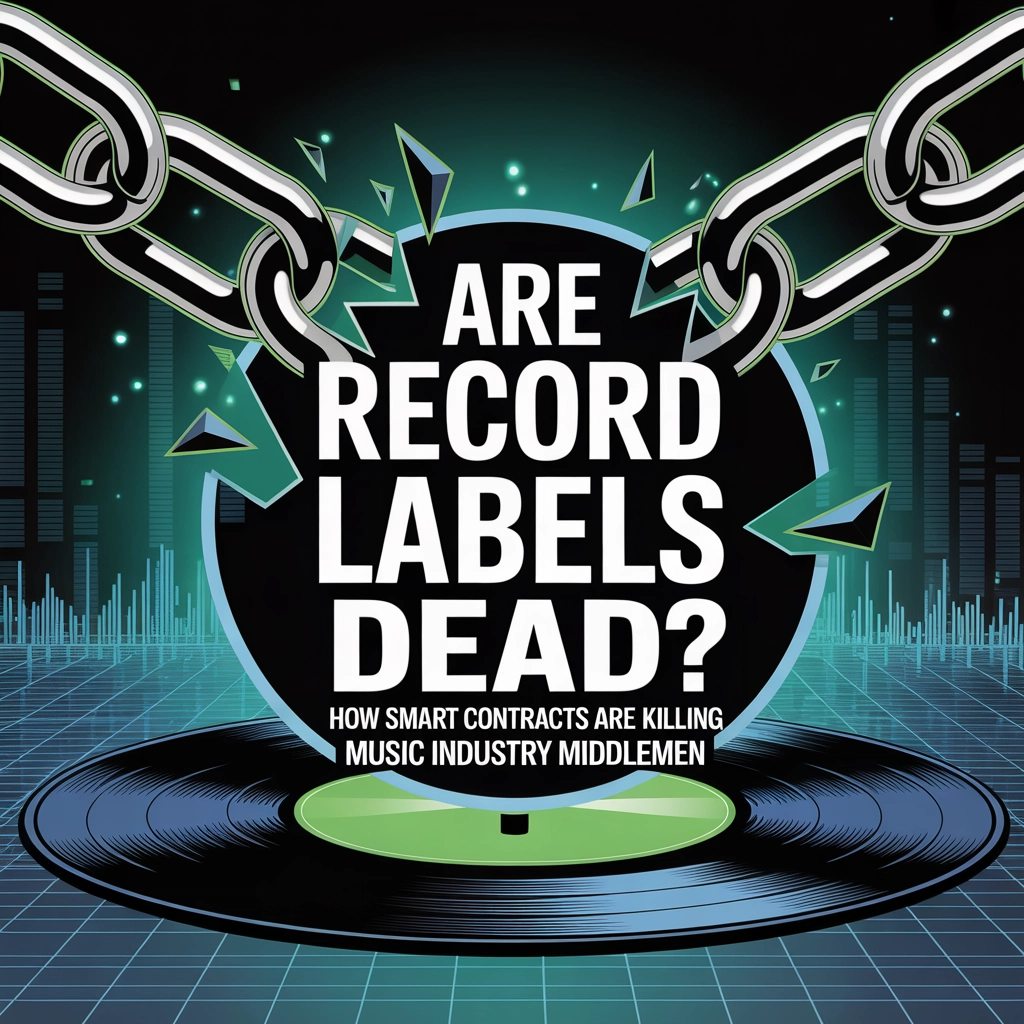
Ryan “Dickie” Thompson here, and I'm about to tell you why the music industry's corporate overlords are shitting their pants.
The writing's on the wall, written in blockchain code and smart contract rebellion. After decades of fat-cat record executives getting rich off artists' sweat and blood, technology has finally handed musicians the tools to tell these parasitic middlemen to take a long walk off a short pier.
Record labels aren't technically dead yet, but they're bleeding out faster than a stuck pig at a barbecue. And honestly? Good fucking riddance.
The Old System Was Pure Highway Robbery
Let's get real about how this scam worked. For generations, the music industry operated like a protection racket where record labels played the role of mob bosses. They controlled every pipeline—radio play, distribution, marketing, even which songs got recorded. Artists had two choices: kiss the ring or stay broke in their garage.
These corporate leeches would swoop in, sign desperate musicians to slave contracts, then skim 85-90% of the profits while the actual creators got table scraps. Meanwhile, they'd lecture artists about being “grateful for the opportunity” while buying third yachts with money that should've gone to the people who actually made the music.

The math was simple: create artificial scarcity, control all distribution channels, then extort everyone who wanted to play the game. It was brilliant if you were a sociopathic executive. It was hell if you had actual talent.
But here's the thing about oppressive systems—eventually, technology comes along and burns them down.
Smart Contracts: The Great Equalizer
Smart contracts are like having an incorruptible robot lawyer that never sleeps, never takes bribes, and executes agreements exactly as written. When an artist uploads their track to a blockchain platform, they can program automatic royalty splits that bypass every single middleman who used to take their cut.
No more waiting six months for a check that's been “processed” through seventeen different departments. No more mysterious “administrative fees” that somehow eat half your earnings. No more executives deciding whether you deserve to get paid this quarter.
The code doesn't lie, doesn't steal, and doesn't give a damn about industry politics.

Take decentralized royalty systems—when someone streams your song, smart contracts instantly calculate splits and distribute payments to everyone involved. Band members, producers, sound engineers, even your grandmother who helped with backing vocals can get their share within seconds, not months.
It's like watching the Death Star explode, except the Death Star was built out of corporate greed and the rebels are armed with mathematics.
Artists Are Breaking Their Chains
Here's where it gets beautiful: over 90% of music on Spotify now comes from independent artists. That's not just a statistic—that's a revolution in progress.
Musicians are realizing they don't need permission from suit-wearing parasites to build careers. Platforms like Audius let artists upload directly to fans. NFT marketplaces enable musicians to sell exclusive content and experiences. Blockchain investment platforms let fans become stakeholders in their favorite artists' success.
The gatekeepers are becoming irrelevant, and they know it.
Imogen Heap figured this out early with her Mycelia project—using blockchain to create transparent, direct relationships between artists and fans. No label executives needed. No corporate middlemen taking their pound of flesh. Just artists creating, fans supporting, and everyone getting a fair deal.
It's the free market actually working the way it's supposed to, without corporate cronies rigging the game.
The Numbers Don't Lie
While record labels survived the first internet disruption by partnering with streaming services, they've created their own destruction. Streaming platforms pay artists almost nothing—we're talking fractions of pennies per stream—while major labels report record profits.
This isn't sustainability; it's exploitation with extra steps.

The disconnect is staggering. Artists create all the value, but executives who contribute nothing beyond bureaucracy and gate-keeping take home the biggest checks. It's like having coal miners work twelve-hour shifts while the mine owner's son gets rich for showing up to ribbon-cutting ceremonies.
Smart contracts eliminate this parasitic layer entirely. When fans pay for music, artists get paid immediately. No executive bonuses. No corporate “overhead.” No mysterious accounting that somehow makes profitable albums appear to lose money.
Direct Democracy in Music
Blockchain platforms are creating something the old system never allowed: direct democracy between artists and fans. Musicians can fund projects through tokenization, sell exclusive experiences as NFTs, and build subscriber communities that pay monthly for early access to new tracks.
It's crowdfunding meets capitalism meets middle finger to corporate control.
Fans become investors. Artists become entrepreneurs. Record executives become unemployed.
The beauty is that it rewards actual talent and fan engagement instead of political connections and marketing budgets. If your music sucks, no amount of label backing will save you. If your music rocks, you can build a direct pipeline to the people who actually matter—your audience.

The Death Rattle
Sure, major labels still have deep pockets and established relationships with radio stations and streaming services. But their advantages are eroding daily.
Independent artists are out-innovating them, out-hustling them, and most importantly, out-earning them on a per-unit basis. When you cut out five layers of corporate fat, suddenly music becomes profitable at much smaller scales.
Plus, younger fans don't give a shit about traditional media gatekeepers. They discover music through TikTok, YouTube, Discord, and peer-to-peer recommendations. The old promotional machinery that labels controlled is becoming as relevant as telegraph operators.
What This Really Means
This transformation isn't just about technology—it's about freedom. Freedom from corporate gatekeepers who decide what art gets made. Freedom from exploitation contracts that trap artists in debt slavery. Freedom from artificial scarcity that keeps great music buried while promoting manufactured pop garbage.
Smart contracts and blockchain platforms are returning power to its rightful owners: the creators and their audiences. It's the most libertarian development in entertainment since the printing press broke the Church's monopoly on books.
Record labels aren't dead yet, but they're terminal. And when they finally flatline, we'll all be better off. The future belongs to artists who create directly for fans who choose freely.
That's not just disruption—that's justice.
Want to dive deeper into how blockchain is revolutionizing artist earnings? Check out our breakdown on decentralized royalties and discover the technology that's putting power back in artists' hands.

Spun Web Technology SMART SEO