

Suika Game

Drop, Merge, and Chill: Your Guide to the Addictive World of Watermelon Puzzles
 Suika Game
Drop, Merge, and Chill: Your Guide to the Addictive World of Watermelon Puzzles
If you’ve scrolled through gaming communities lately, you’ve probably heard the buzz around watermelon puzzles. These deceptively simple games have taken the casual gaming world by storm, and for good reason. They’re the perfect blend of relaxation and challenge—the kind of game you can play on your lunch break without needing a PhD in gaming strategy. Let’s dive into what makes these puzzles so captivating and how you can master them.
What Exactly Is a Watermelon Puzzle Game?
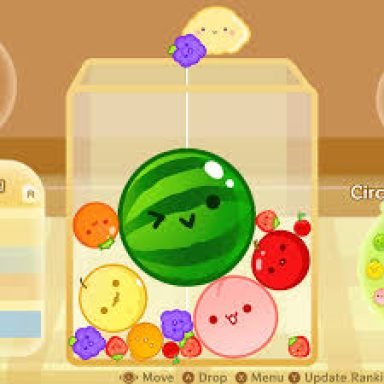
At their core, watermelon puzzle games are merge-and-drop mechanics wrapped in a charming, fruit-themed package. The concept is straightforward: you drop fruits into a container, and when two identical fruits touch, they combine into something bigger. The ultimate goal? Reach the watermelon by creating progressively larger fruit combinations.
The most popular example is Suika Game, which perfectly captures this addictive formula. Starting with small fruits like cherries and strawberries, you’ll work your way through oranges, melons, and eventually the grand prize—the watermelon itself. It sounds simple, and that’s the genius of it. There’s no complicated backstory, no complex controls, just pure puzzle-solving satisfaction.
How to Play: The Basics
Starting a watermelon puzzle game feels almost too easy. You’re presented with a rectangular box and a queue of upcoming fruits. Your job is to decide where each fruit falls. Tap or click your chosen position, and gravity does the rest.
When two identical fruits collide, they automatically merge into the next size up. This is where strategy begins to creep in. Early on, you might accidentally create a berry that you didn’t plan for, sending you down an unexpected puzzle path. That’s part of the charm—there’s no one “correct” way to play.
As you progress through Suika Game and similar titles, the space becomes increasingly cramped. This is the real challenge. Unlike Tetris, you can’t rotate pieces or plan an elaborate strategy before placing anything. You work with what the game gives you, adapting on the fly.
The game ends when fruits stack beyond the top of your container. That simple failure condition creates constant tension. Every placement matters, yet the game remains forgiving enough that new players won’t feel frustrated after their first loss.
Mastering the Puzzle: Practical Tips
Plan Your Merges, But Stay Flexible
While watermelon puzzles aren’t chess, a little forethought helps. Try to anticipate what the next few fruits will be and mentally map out where they might fit. However, don’t get too attached to a plan—games like these thrive on adaptation.
Create Central Stacks
Experienced players tend to build vertically rather than spreading fruits across the board horizontally. Stack similar fruits in one area, allowing them to merge upward and free up space. This keeps your playing field organized and gives you room for unexpected pieces.
Use Edges Strategically
The walls of your container are your friends. Place fruits against the edges to anchor your formations and prevent them from rolling around chaotically when new pieces land nearby. This creates stability and makes chain reactions more predictable.
Don’t Rush Your Moves
There’s no timer in most watermelon puzzle games, so take your time. Look at the upcoming fruit in your queue and think about where it logically fits. A few extra seconds of contemplation often save you from a game-ending mistake.
Learn From Your Losses
Every failed game teaches you something. Maybe you left too much empty space, or perhaps you got greedy trying to create that next big fruit. Analyzing what went wrong is far more valuable than treating each loss as just bad luck.
Embrace the Shuffle
Some games include a shuffle feature that randomly rearranges your current fruits without adding new ones. It’s tempting to use it as an emergency button, but it’s often better saved for when you’re truly stuck. Use it wisely.
Why These Games Are So Satisfying
There’s something deeply satisfying about watching fruits merge. It’s not just the visual animation—though developers nail that aspect—it’s the sense of progress. Each merge is tangible proof that you’re making moves toward your goal. This immediate feedback loop, combined with the low-pressure environment, makes watermelon puzzles perfect for unwinding.
These games also scratch a particular itch that many casual gamers crave: achievement without stress. You’re not competing against anyone, racing against time, or fighting difficult AI opponents. You’re simply solving a puzzle at your own pace, which makes them remarkably inclusive for players of all ages and skill levels.
Conclusion: Simple Fun That Sticks With You
Watermelon puzzles represent something special in the gaming landscape. They prove that you don’t need flashy graphics, complex mechanics, or intense competition to create something genuinely enjoyable. Whether you’re checking out Suika Game for the first time or you’ve already reached the watermelon milestone, these games offer the kind of relaxing challenge that keeps you coming back.
The beauty of watermelon puzzles is their accessibility. Anyone can jump in and start playing within seconds. Yet beneath that simple exterior lies a puzzle that rewards thoughtful play and clever positioning. It’s the kind of game you can play for five minutes or five hours, depending on your mood.
So grab your device, find a watermelon puzzle game you like, and start dropping fruits. Whether you reach the watermelon on your first try or your hundredth, the journey is the real reward. Happy merging!
Sorry, there were no replies found.
Log in to reply.
About group
Organizers

You can play Suika Game in your browser, free, without downloading a thing — which is probably why it spread the way it did. There’s no... Show more