


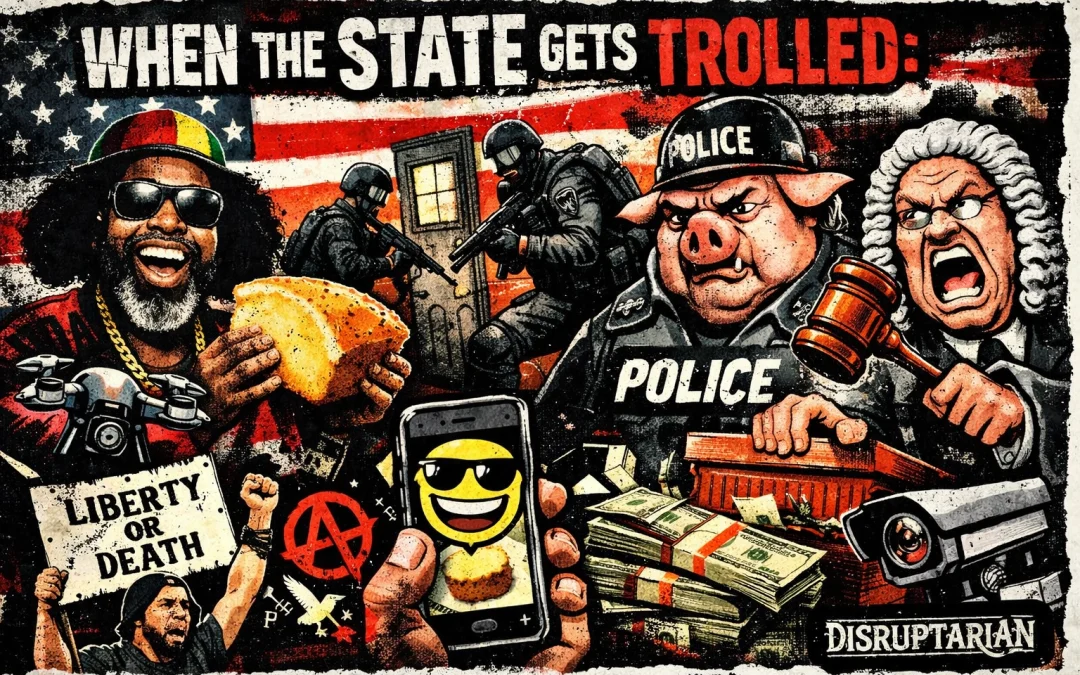
The Afroman police lawsuit shows what happens when government agents start crying over a music video in the so-called “Land of the Free.”
Afroman Police Lawsuit and Lemon Pound Cake Video Explained
Let’s just say it straight: when government agents start crying over a music video, something has gone very wrong in the “Land of the Free.”
We’re talking about the ongoing circus involving Afroman, a search warrant gone sideways, and a group of officers who somehow thought suing a musician for trolling them was a good idea. Spoiler alert: It wasn’t. It’s actually one of the funniest, most satisfying legal backfires in recent memory. It’s a masterclass in how the individual can take the power back from the state using nothing but a security camera and a sense of rhythm.
And yeah, we’ve got to talk about Officer Poundcake. Because once the internet names you after a pastry, the state’s monopoly on “respect” is officially dead.
The Setup: A Search Warrant and a Slice of Cake
In 2022, the Adams County Sheriff’s Office decided to go full tactical on Joseph Foreman, better known as Afroman, at his home in Winchester, Ohio. They showed up with rifles, kicked in his gate, and smashed through his front door. The goal? They claimed they were looking for evidence of kidnapping and drug trafficking. Big claims. Serious stuff. The kind of stuff that justifies “no-knock” energy, right?
Wrong.
What did they actually find? No victims. No trafficking ring. No mountain of contraband. Just a house full of cameras, some cash that the police allegedly “miscounted” (and had to return later), and a fresh lemon pound cake sitting on the counter.
Most people would be traumatized. Most people would hire a lawyer and disappear into a three-year paper trail of “internal investigations” that lead nowhere. But Afroman isn’t “most people.” He did something the state didn’t see coming: He turned the whole raid into content.
Market-Driven Accountability
Afroman took his own security footage, the very images of these officers rummaging through his closets and staring longingly at his snacks, and edited them into music videos. He didn’t just tell the story; he remixed it. He used their own movements, their own faces, and their own tactical gear to create a viral critique of government overreach.

Prompt: A gritty, high-contrast illustration of a musician (Afroman style) sitting in a director's chair, editing police body cam footage into a music video, “Free Speech” spray-painted in the background.
This is what we call market-driven accountability. When the official channels of “justice” fail, when the police investigate themselves and find they did nothing wrong, the free market of information steps in. Afroman didn’t need a permit to protest. He needed a beat and an internet connection. He turned a property-damaging raid into a revenue stream, using the proceeds from the songs to pay for his new gate. That is peak Disruptarian energy.
The Lawsuit: Feelings vs. Reality
Now here’s where the “fragile ego” part kicks in. Instead of taking the L and moving on, seven of the officers involved decided to sue Afroman for defamation. Their claim? The videos made them look like “thieves” and caused them “mental distress.” They literally claimed that being mocked on the internet was a violation of their privacy.
Let’s pause. These are men and women who carry guns, wear badges, and have the legal authority to deprive you of your life and liberty. They operate under “color of law,” backed by taxpayer funding and qualified immunity. Yet, when the public laughed at them, they ran to the court like children on a playground.
In a free society, vibes don’t override speech. The burden in a defamation case is high for a reason: you have to prove that what was said was false, and in this case, Afroman was literally using their own actions caught on camera. If you look like a guy who is obsessed with a lemon pound cake in a video, and the video is just a recording of you looking at a lemon pound cake… that’s not defamation. That’s a mirror.
Officer Poundcake: A Case Study in Public Perception
We have to address the elephant in the room. Or more accurately, the cake.
The nickname “Officer Poundcake” didn’t come from some deep-state conspiracy or an organized smear campaign. It came from a clip. A moment. A guy in tactical gear walking past a dessert like he just found religion.
The officer was upset that the public ran with it. But here’s the reality: You don’t get to control how people interpret what you do in public, especially when you work for the state. When you kick down doors, you are a public figure. When you represent the force of the government, you are subject to the ridicule of the governed.
This reminds me of the psychological tactics we see in other areas of state and social control. Whether it’s the attachment-based model used in parental alienation cases or the way narcissistic systems try to flip the script on the victim, the goal is always the same: Control the narrative. But the internet has made that control impossible.
Free Speech Isn’t Suppose to Be Comfortable
The officers claimed their reputations were damaged. One female officer even broke down in tears during testimony, citing the “harassment” she faced online. While I don’t advocate for harassment, we have to be clear: Respect isn’t demanded by a badge; it’s earned by conduct.
If your reputation is so fragile that a music video can destroy it, what was that reputation built on in the first place?
The state is used to having a monopoly on the story. For decades, the “official police report” was the only version of the truth that made it to the evening news. But decentralization has changed the game. Now, anyone with a Ring camera and a TikTok account is a journalist. Anyone with a sense of satire is a critic.
The Jury Weighs In
In the end, the jury saw through the nonsense. They ruled in favor of Afroman. They recognized that satire is a protected form of speech, and that criticizing public officials is the literal foundation of the First Amendment.
The officers wanted $3.9 million in damages. They wanted to sue a joke out of existence. Instead, they just gave the “Lemon Pound Cake” video more views and solidified their place in the Hall of Fame of Legal Backfires.
Watch the madness for yourself here:
https://www.youtube.com/watch?v=W_2Y5e_3dko
The Real Power Shift: Transparency and Cameras
This isn’t just about a rapper in Ohio. It’s about the shift in power from the institution to the individual.
- Transparency: Surveillance works both ways. When the state watches us, we watch back.
- Creativity: You cannot litigate humor. Satire is the ultimate weapon against a bloated, self-serious government.
- Decentralization: The “official story” is dead. The marketplace of ideas, messy, loud, and full of memes, is where the truth actually lives.
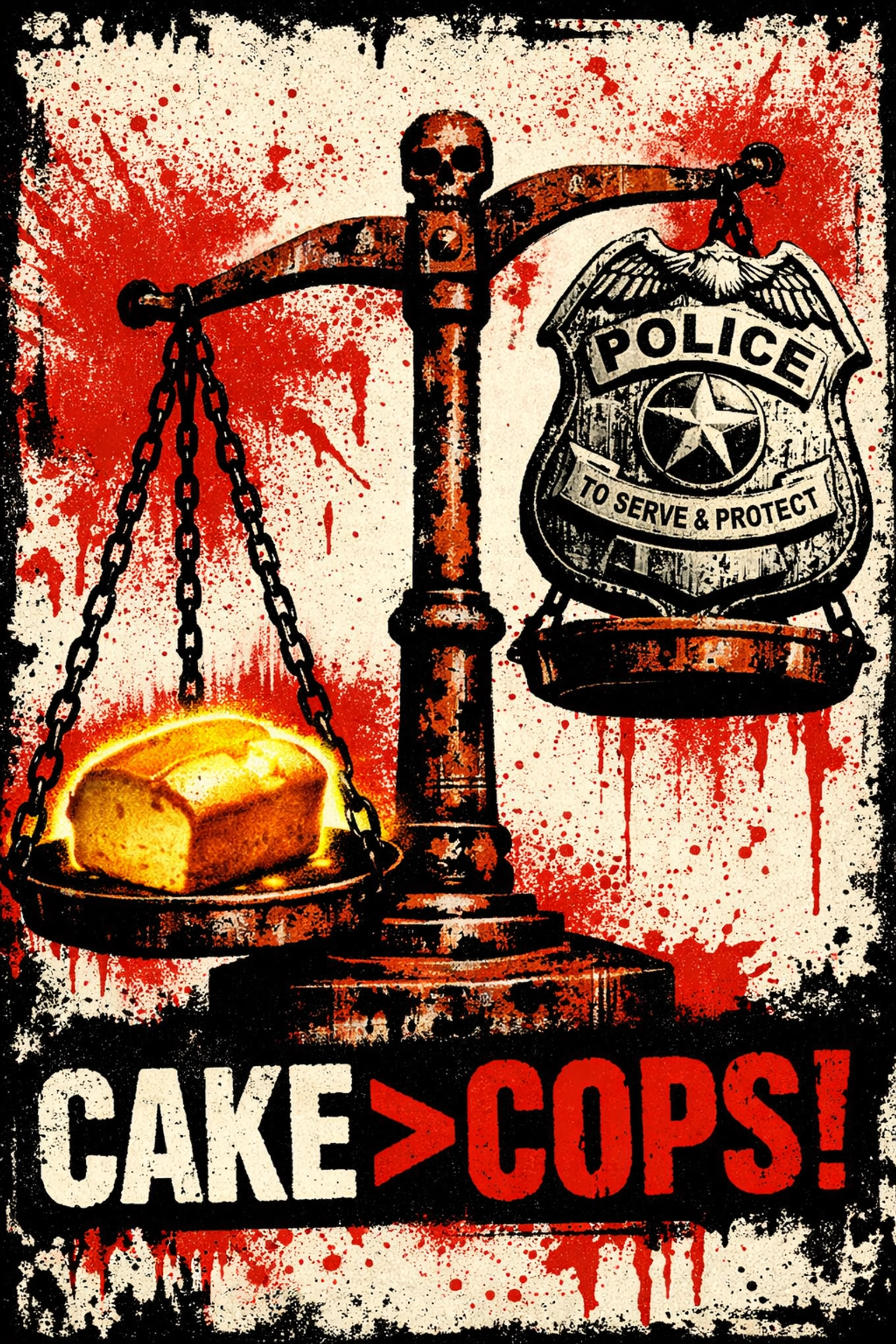
Afroman police lawsuit lemon pound cake video
Prompt: A visual of a “Courtroom Scale” where a tiny lemon pound cake is outweighing a massive police badge, symbolizing the power of satire over state force.
Final Thought: Don't Tread on the Cake
If you’re going to operate in the public eye with the power of the state behind you, you need thicker skin. You will be criticized. You will be mocked. And if you’re acting like a goon on camera, you might even become a viral sensation for all the wrong reasons.
The alternative is a world where no one can question or ridicule power. That’s not “safety” or “officer protection.” That’s tyranny with a shiny badge. Afroman didn’t just win a lawsuit; he won a victory for every person who has ever been told that the government’s “feelings” matter more than the citizen’s rights.
Stay disruptive. Stay skeptical. And for the love of liberty, keep the cameras rolling.
Afroman didn’t just win a lawsuit; the Afroman police lawsuit became a victory for every person who has ever been told that the government’s “feelings” matter more than the citizen’s rights.
Sources & References:
- Afroman Court Breakdown Video | https://www.youtube.com/watch?v=W_2Y5e_3dko
Additional Sources
-
- Billboard: Afroman Sued by Ohio Deputies Over Music Videos | https://www.billboard.com/pro/afroman-sued-ohio-deputies-music-videos-lawsuit/
- Rolling Stone: Afroman Lawsuit Explained | https://www.rollingstone.com/music/music-news/afroman-lawsuit-police-raid-music-videos-1234697070/
- NBC News: Deputies Sue Afroman After Raid Footage Appears in Music Videos | https://www.nbcnews.com/news/us-news/deputies-sue-afroman-music-videos-police-raid-rcna73153
- Reuters: U.S. Deputies File Lawsuit Against Rapper Afroman | https://www.reuters.com/legal/us-deputies-sue-rapper-afroman-over-music-videos-2023-03-28/
- Reason Magazine: Police Sue Afroman for Using Raid Footage | https://reason.com/2023/03/29/cops-sue-afroman-for-making-music-videos-about-his-own-raid/
- ACLU: Defamation and Free Speech Basics | https://www.aclu.org/issues/free-speech/defamation

Spun Web Technology SMART SEO