

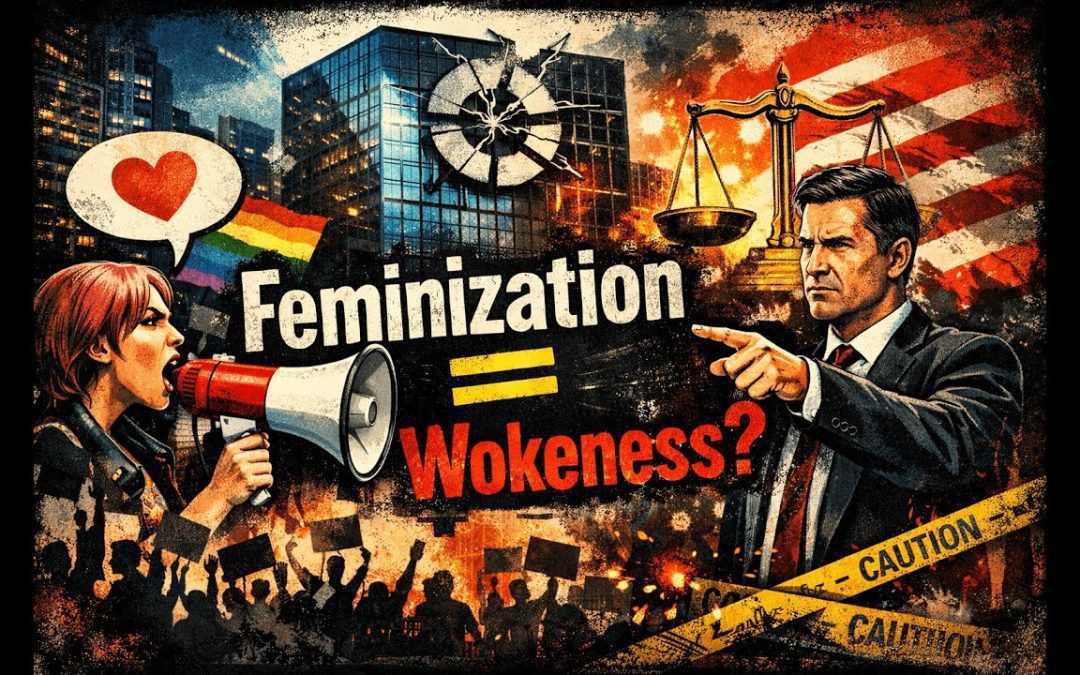
What if “wokeness” did not come out of nowhere, and it is not just a political fad, but a predictable shift in how institutions think and behave?
In this clip, I lay out a blunt hypothesis: wokeness tracks demographic feminization. As more women entered major institutions starting in the 1970s, the internal priorities shifted over time toward traits typically coded as “feminine,” like empathy over rationality, safety over risk, and cohesion over hierarchy. That does not mean men are always “rational” or women are always “emotional.” Individuals vary. The claim is about broad institutional incentives and cultural drift when one set of values starts dominating the room.
We walk through:
Free speech vs inclusive society: survey splits that show different priorities between men and women on speech protections versus social inclusion.
James Damore and the Google memo: why the backlash centered less on factual claims and more on perceived emotional impact.
The Kavanaugh hearings: the clash between rules of evidence and emotional credibility, and why that divide matters for due process.
If you care about free speech, fairness, and how power actually operates inside institutions, this one is worth hearing, even if you disagree.
Drop your take in the comments: Is “wokeness” mainly politics, or is it a deeper cultural reorientation?

Spun Web Technology SMART SEO