

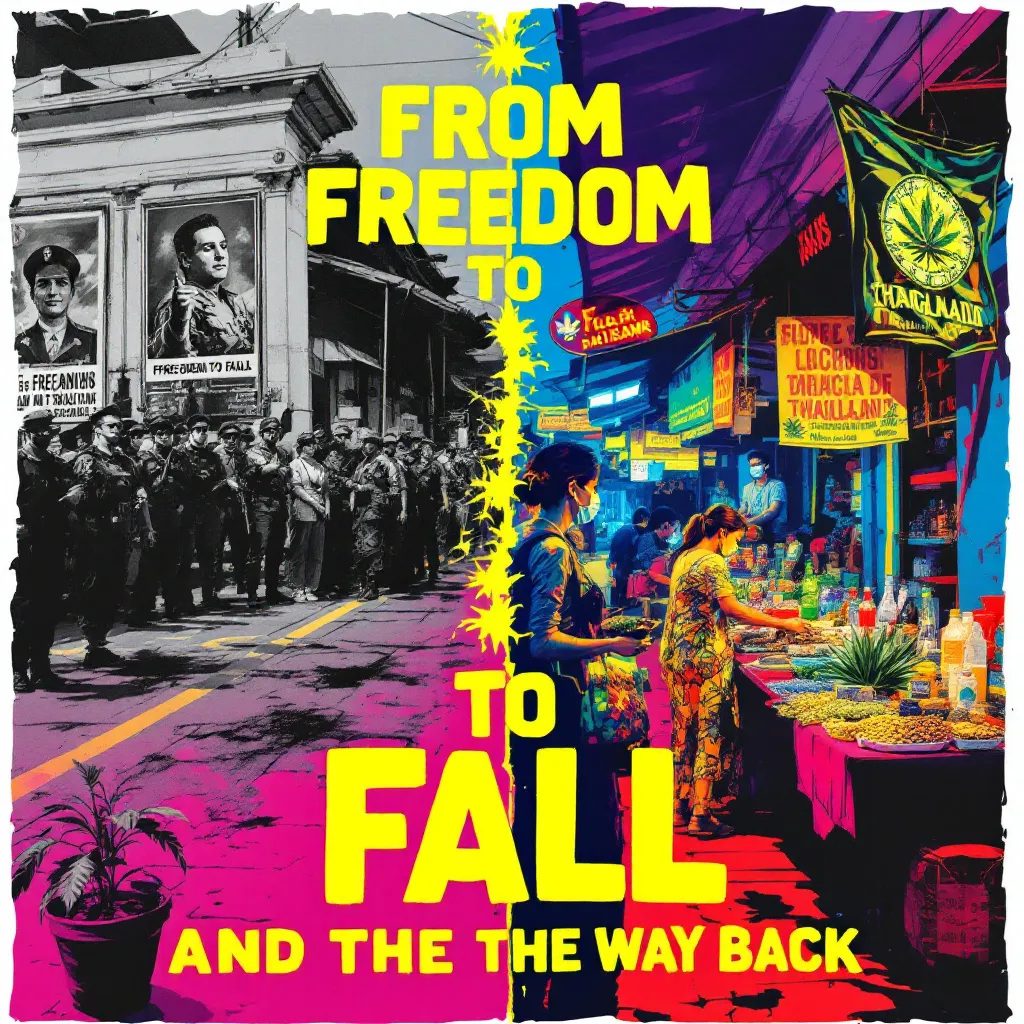
Once hailed as the second wealthiest nation in Asia after Japan, the Philippines was poised for greatness in the mid-20th century. With a strategic location, abundant natural resources, and a strong post-war recovery, the country had all the ingredients for economic success. But today, it ranks among Southeast Asia's most poverty-stricken nations.
So, what went wrong?
The Roots of Decline: Corruption, Control, and Cronyism
The answer lies in decades of political corruption, authoritarian rule, and a moralistic state that stifled economic freedom and individual liberty.
Open bribery and institutional graft became normalized, infecting every level of government. Public contracts, licenses, and even basic services were often tied to political favors or outright payoffs. This culture of corruption drained resources away from infrastructure, education, and innovation.
During the Marcos regime (1972–1981), martial law was imposed under the guise of restoring order. In reality, it centralized power, crushed dissent, and enabled widespread theft of public funds. Human rights abuses were rampant. Free press and political opposition were dismantled. All in the name of “discipline” and eliminating “mortal sins.”
The state's obsession with moral policing came at the cost of real freedom. Rather than encouraging voluntary exchange and self-governance, the government dictated what was acceptable behavior. The war on so-called vices became an excuse for expanding authoritarian control.
The government created an environment where only those with political connections could succeed. Entrepreneurs were blocked by red tape, taxes, and arbitrary regulations. The result? Widespread poverty, a shrinking middle class, and mass migration of talent overseas.
A Brief Golden Era
In the years immediately after World War II, the Philippines had one of the most promising economies in Asia. Its infrastructure was among the most developed, its education system was advanced, and English proficiency opened up trade and cooperation with the West. There was hope that the country could serve as a model for post-colonial development in the region.
In the 1950s and 1960s, many countries in Asia were still recovering or struggling to industrialize. The Philippines stood out with its democratic institutions and relatively strong economy. It was a magnet for foreign investment, and many economists believed it was only a matter of time before it caught up with Japan.
However, as other countries pursued market-based reforms, strengthened their institutions, and cracked down on corruption, the Philippines moved in the opposite direction. Power became more centralized, elections turned into charades, and policies were crafted to enrich elites at the expense of everyone else.
The Marcos Years: A Turning Point
Ferdinand Marcos came to power in 1965. By 1972, citing threats of communist insurgency, he declared martial law. This period would become one of the darkest in the country’s history. Civil liberties were suspended, media was censored, and political opponents were jailed, tortured, or disappeared.
At the same time, the Marcos family and their cronies looted the nation's wealth. Billions of dollars were siphoned off through fake projects, ghost corporations, and overpriced infrastructure. The country borrowed heavily from international lenders, enriching a few while burdening the many.
Despite occasional economic upticks driven by foreign debt and remittances, real development stalled. Schools declined. Health care became more inaccessible. The public transport system crumbled. Basic services, once taken for granted, became scarce or corrupt.
Underneath all this was a growing culture of fear and obedience. Martial law wasn't just a political move; it was a cultural reset. Citizens learned to stay silent, avoid confrontation, and accept the state’s authority even when it was abusive or incompetent.
Post-Marcos: A Missed Opportunity
The 1986 People Power Revolution ousted Marcos and was hailed as a triumph of democracy. But while the people changed the figurehead, the system remained largely the same. Corruption persisted, though less overt. Elitist politics dominated. Oligarchic control over land, media, and commerce continued.
Despite a return to electoral democracy, the Philippines never fully transitioned to a free market. It retained a bloated bureaucracy and a paternalistic government structure. Reforms were often watered down or blocked altogether.
Many politicians promised change but delivered more of the same. Infrastructure lagged behind. The business climate remained hostile. Entrepreneurs continued to be strangled by permits, taxes, and unpredictable regulations.
From Promise to Poverty
The economic consequences were devastating. From being a rising star, the Philippines fell behind its neighbors. Countries like South Korea, Singapore, and more recently, Vietnam and Thailand outpaced it in terms of GDP growth, investment, and living standards.
According to Seasia.co's 2022-2023 report, the Philippines now suffers one of the highest poverty rates in Southeast Asia. This is not due to lack of resources or capability. It is a failure of governance and ideology.
The World Bank estimates that over 20% of the population lives below the national poverty line. Millions more hover just above it, vulnerable to even minor economic shocks. Meanwhile, an estimated 2 million Filipinos leave the country each year to find work abroad. This brain drain weakens the local economy and breaks up families.
The tragedy is that it didn’t have to be this way.
A Path Forward: Decentralization, Liberty, and Market Innovation
To break this cycle, the Philippines must shift away from centralized control and embrace individual liberty and economic freedom.
Here are some key reforms that could spark a turnaround:
1. End Authoritarian Legal Structures
The martial law doctrine should be permanently rejected. Power must be returned to local communities and individuals. Decentralized governance allows for accountability and innovation at the grassroots level.
Regions should be given more autonomy to manage their resources, craft local policies, and attract investment. The more decision-making power is concentrated in Manila, the harder it is to respond to the unique needs of different areas.
2. Decriminalize Cannabis and Natural Liberties
Following Thailand's example, the decriminalization of cannabis could open up new industries, create jobs, and promote health freedom. Rather than punishing peaceful choices, the state should focus on protecting life, liberty, and property.
Thailand’s recent decision to legalize cannabis for medical and recreational use has sparked a boom in agribusiness and tourism. There's no reason the Philippines can’t do the same. Instead of locking up people for possession, the country could generate revenue, stimulate rural economies, and invest in education and health.
3. Dismantle Crony Capitalism
True free markets mean dismantling monopolies protected by government connections. Level the playing field by reducing red tape, eliminating favoritism, and empowering entrepreneurs through deregulation.
Right now, many of the largest businesses in the Philippines are owned by families with deep political ties. These monopolies limit competition and keep prices high. Break them up. Encourage startups and foreign investments. Let the best ideas win.
4. End Sin Taxes and Moral Policing
Sin taxes don't promote virtue; they punish the poor and fund bloated bureaucracies. Instead of trying to engineer morality, let individuals make their own choices. Voluntary exchange and personal responsibility should be the guiding principles.
Prohibition and excessive taxation never work. Whether it’s alcohol, tobacco, or gambling, people will find a way. By legalizing and regulating these activities without punitive taxes, the state can reduce black markets and increase transparency.
5. Encourage Innovation Through Economic Liberty
Remove barriers to trade, reduce progressive taxation, and encourage foreign investment. Free markets, not government handouts, drive prosperity. Let the people build, trade, and innovate without interference.
Education and technology should be at the forefront. Encourage private schools and online learning platforms. Promote coding, business, and vocational training. Let the youth build the future without being chained by old systems.
6. Privatize Failing Institutions and Cut Government Waste
Many state-owned enterprises in the Philippines are inefficient, corrupt, and unaccountable. Privatize them. Use the proceeds to pay down debt and invest in real public goods like roads, clean water, and broadband access.
Audit all agencies. Cut unnecessary programs. Reallocate resources based on results, not political favors.
Conclusion: Liberty Is the Way Forward
The Philippines doesn't need more government programs or moral crusades. It needs freedom. Freedom to trade, speak, innovate, and live without fear of arbitrary punishment. The failure of central planning and moral authoritarianism is clear. It's time to trust the people.
Economic freedom, voluntary exchange, and limited government are not just libertarian ideals. They are the proven path to prosperity.
We’ve seen it in places like Singapore, which embraced open markets and rule of law. We see it now in Thailand, whose bold reforms are already bearing fruit. The Philippines can reclaim its lost potential. But only if it chooses liberty over control, innovation over ideology, and people over power.
Sources:
- https://seasia.co/infographic/southeast-asias-poverty-rate-2022-2023
- https://2009-2017.state.gov/outofdate/bgn/philippines/111389.htm
- https://www.philstar.com/opinion/2025/08/28/2468559/root-causes-graft-corruption
- https://edition.cnn.com/2025/06/28/travel/thailand-cannabis-laws-tourism-intl-hnk

Spun Web Technology SMART SEO