





Gender affirming care lawsuits are no longer theoretical, they are now hitting doctors, hospitals, and insurers in courtrooms across the United States.
I listened to this podcast, and I agree with these guys in every way. Not because it's trendy. Not because it fits some political tribe. But because I've watched my own kids struggle through phases, confusion, identity, and growing pains. That's what childhood is. It's messy. It's not stable. And it is not permanent.
That's why this story matters.
The Lawsuits Are Just Getting Started
A New York jury recently awarded $2 million to a 22-year-old woman named Fox Varian who had a double mastectomy at 16. She says doctors rushed her into it. The jury agreed.
She received $1.6 million for pain and suffering and $400,000 for future medical care. The verdict specifically found that psychologist Kenneth Einhorn and surgeon Simon Chin departed from the standard of care by pressuring her into irreversible surgery. According to trial records, Einhorn allegedly told Fox's mother that her daughter would commit suicide if she didn't consent to the procedure.
That number may sound big. It's not. Not for the lifetime of damage. But it's a start.


In a free society, when someone causes permanent harm, liability is the tool that corrects the behavior. Not politicians. Not speech codes. Not federal agencies. Liability.
This is what many libertarians have been saying for years. You don't need massive federal bans if the courts hold people accountable for reckless medical practices. The market corrects when lawsuits make bad behavior expensive.
And this case just moved the Overton window.
Children Are Not Adults
Here's the simple truth: children cannot get tattoos. They cannot buy alcohol. They cannot sign contracts.
But somehow, in some states, they can consent to irreversible surgeries.
That makes no sense.
If you're 25 years old and want to transition, that's your business. That's freedom. You live with the results. But a 13 or 16-year-old? That's different. Their brains are still developing. Their identities are forming. Puberty alone changes everything.
When I was growing up, we had tomboys. Girls who played rough. Girls who ran with the boys. No one thought it meant they needed surgery. Puberty hit, and most of them matured into who they were naturally going to be.
Kids go through phases. Always have. We shouldn't treat a phase like a surgical emergency.
The Liability Model Works (And Here's Exactly How)
This is where the libertarian argument gets strong. Instead of screaming for federal bans, let the lawsuits happen.
If doctors and hospitals face massive malpractice risk for rushing minors into irreversible procedures, they will stop. Here's the mechanism:
First, the lawsuits create precedent. Fox Varian's case isn't isolated. Chloe Cole is suing Kaiser Permanente. Soren Aldaco brought her case before the Texas Supreme Court in February 2026. These are the opening shots in what will likely become a flood of litigation.
Second, precedent changes insurance underwriting. Malpractice insurers don't care about your politics. They care about risk. If juries start awarding millions to detransitioners, premiums will skyrocket for providers offering gender-affirming care to minors. Some doctors won't be able to get coverage at all.
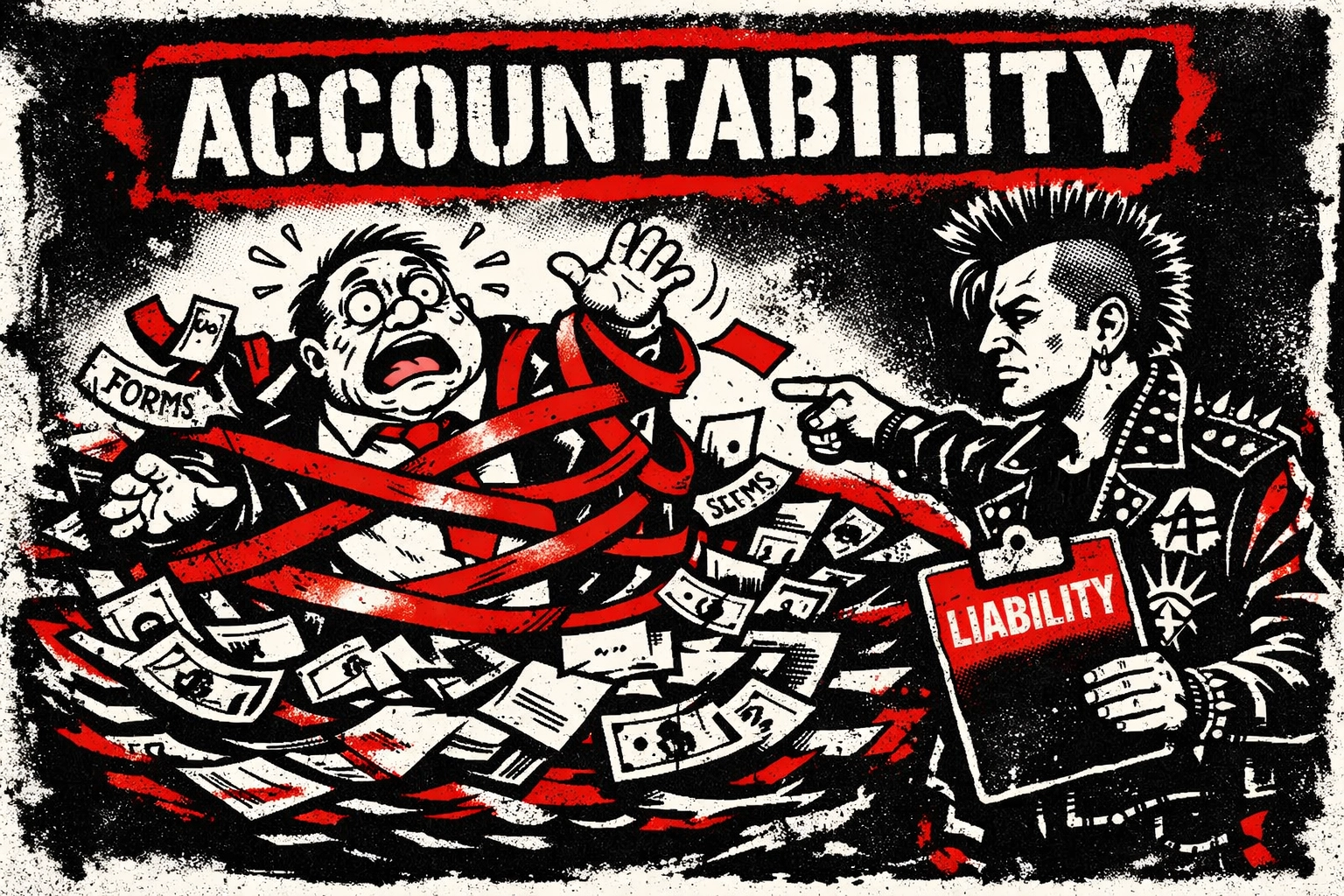

Third, hospitals adjust protocols to minimize exposure. When insurance becomes prohibitively expensive, hospital legal teams step in. They'll demand longer evaluation periods, more psychological assessments, stricter age limits, and documented parental consent. Not because they suddenly grew a conscience, because the math changed.
Fourth, professional boards tighten standards. Medical associations watch liability trends closely. When the American Medical Association sees multi-million-dollar judgments, their guidelines shift. We've seen this pattern before in other areas of medicine, from surgical procedures to pharmaceutical prescriptions.
That's how accountability works in a market system. It doesn't require a national mandate. It requires responsibility.
If Fox Varian can prove she was pressured, misled, or not properly evaluated, and she did, then the doctors who pushed it should pay. And I predict this is only the beginning.
The Insurance Kill Shot: Why Money Talks Louder Than Politics
Let me break down the insurance angle even further, because this is where the real power lives.
Insurance companies are some of the most risk-averse institutions on the planet. They're not in the business of ideology. They're in the business of not losing money. When a new category of malpractice claims emerges, especially one involving minors and permanent physical alterations, actuaries start running the numbers.
Here's what they're calculating:
Potential exposure per case: If the average settlement or verdict is $2 million, and there are hundreds of potential plaintiffs aging into the statute of limitations window, that's billions in potential liability.
Frequency risk: How often will these claims be filed? The answer depends on detransition rates, which are disputed but appear to be rising as more people reach adulthood and reconsider early medical interventions.
Defense costs: Even if a doctor wins the case, defending a medical malpractice lawsuit costs hundreds of thousands of dollars in legal fees, expert witnesses, and court costs.


When insurers run these numbers, premiums adjust accordingly. In some cases, coverage becomes unavailable entirely. That's not a bug, that's a feature. It's the market saying: “This practice carries too much risk for us to underwrite.”
And once insurance dries up, the practice stops. Hospitals won't allow procedures their insurance won't cover. Doctors won't perform surgeries that could bankrupt them personally.
No federal law required. No executive order. No congressional hearing. Just the invisible hand of the market doing what it does best: pricing in risk.
The Supreme Court and the Shifting Legal Landscape
The legal terrain is shifting rapidly. In June 2025, the Supreme Court decided United States v. Skrmetti, upholding Tennessee's ban on gender-affirming care for minors. This wasn't a libertarian outcome, it was a state-level restriction, but it reflects the growing judicial skepticism around rushing minors into irreversible medical decisions.
The Skrmetti decision didn't settle the debate. It opened the door for more state-level regulations. Arkansas followed with its own ban, upheld by the U.S. Court of Appeals. Other states are watching closely.
But here's the thing: whether you agree with state bans or not, the Fox Varian verdict operates on a completely different plane. State bans are top-down restrictions. Liability is bottom-up accountability. One tells doctors what they can't do. The other makes them pay when they do harm.
I prefer the latter. It's cleaner. It's more precise. And it doesn't require politicians to guess what's medically appropriate.
Compassion Without Coercion
This isn't about hating anyone. Adults should live how they want. That's freedom. If you're 25 and you want to transition, that's your call. You own the outcome.
But compassion doesn't mean rushing kids into permanent medical decisions. Real compassion means slowing down. Counseling. Therapy. Time.
The free market doesn't mean chaos. It means accountability. If you harm someone, you pay.
Fox Varian's case shows that juries are starting to recognize that harm. They're saying: “No, a 16-year-old cannot give informed consent to a double mastectomy. And if you pressured her into it, you owe her.”
That's a powerful message. It's not coming from Congress. It's coming from 12 ordinary people who heard the evidence and made a decision.
And I believe there will be many more lawsuits in the future. When that happens, the system will correct itself. Not because politicians forced it to. But because the cost of being reckless became too high.
That's how a free society protects people.
The Incentives Are Changing (And Fast)
Once a precedent is set, the incentives shift overnight.
We've already seen activist groups pushing to extend statutes of limitations in these cases. Why? Because regret often takes years to manifest. A teenager who transitions at 15 might not fully understand what they've lost until they're 22, 25, or 30. If the law allows them to sue even a decade later, the liability exposure becomes even more severe.
Malpractice insurers are already pricing in that risk. Medical associations are already adjusting their language. Hospitals are already drafting new protocols.
Even medical associations will adjust once money is on the line. We've already seen that happen in other fields. Liability drives reform. It always has.
This isn't theory. This is the market working exactly as libertarians have always argued it should. Bad actors get punished. Incentives realign. Protection emerges without top-down mandates.
The Bottom Line
Freedom means living with your own choices. But protecting kids is common sense.
The Fox Varian verdict isn't just a headline. It's a signal. It tells the medical establishment: if you rush minors into irreversible procedures, you will pay. Not in political capital. In dollars. In reputation. In professional consequences.

That's more powerful than any federal ban. That's the market defending the defenseless. That's liability doing what it's supposed to do: correcting reckless behavior through real accountability.
And if you're a doctor considering fast-tracking a teenager into surgery, you might want to think twice. Because the next jury might cost you a lot more than $2 million.
Welcome to the free market. It's not perfect. But it's honest.
And it just might save a generation of kids from irreversible mistakes.
Sources & References
- Washington Examiner, “Detransitioner's $2 million judgment a ‘breakthrough' for gender transition lawsuits” | https://www.washingtonexaminer.com/news/justice/4443285/detransitioners-2-million-dollar-judgment-breakthrough-gender-transition-lawsuits/
- Associated Press, “Supreme Court OKs Tennessee ban on gender-affirming care for kids, a setback for transgender rights” | https://apnews.com/article/79fc6f3bbdab2e92d6f0184201a468a9
- U.S. Supreme Court, “United States v. Skrmetti, 23-477, Opinion (June 18, 2025)” | https://www.supremecourt.gov/opinions/24pdf/23-477_2cp3.pdf
- Reuters, “US appeals court upholds Arkansas law banning youth transgender care” | https://www.reuters.com/legal/government/us-appeals-court-upholds-arkansas-law-banning-youth-transgender-care-2025-08-12/
- WORLD, “Jury awards detransitioner $2M in medical malpractice case” | https://wng.org/sift/jury-awards-destransitioner-2m-in-medical-malpractice-case-1770046329
- Fox News, “The medical system pushed transgender surgery on kids, now it's facing legal justice” (opinion by Chloe Cole) | https://www.foxnews.com/opinion/medical-system-pushed-transgender-surgery-kids-now-its-facing-legal-justice
- Podcast source | https://www.youtube.com/watch?v=igC_JsBmo9g

