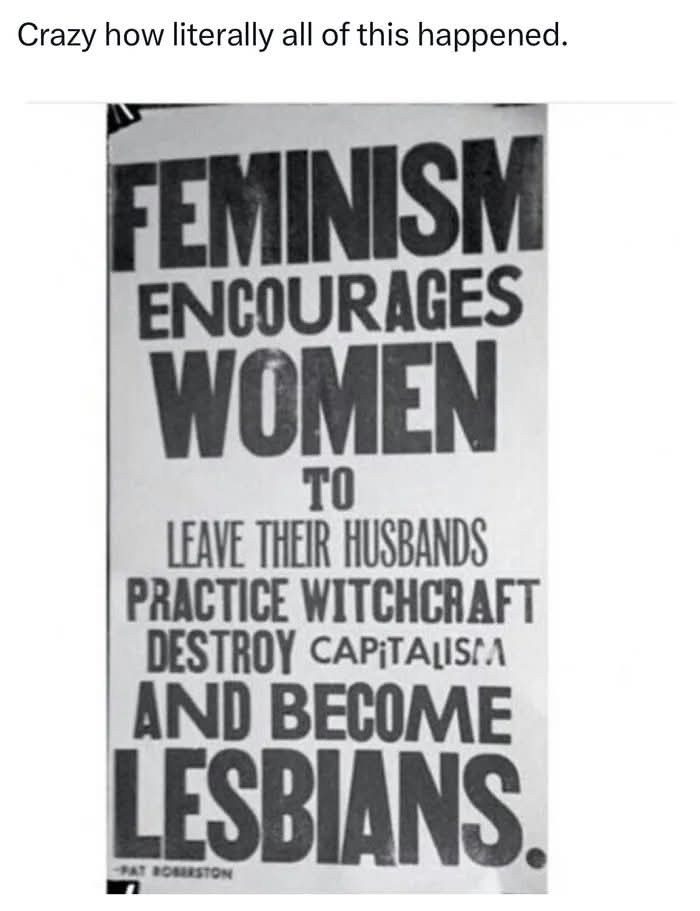

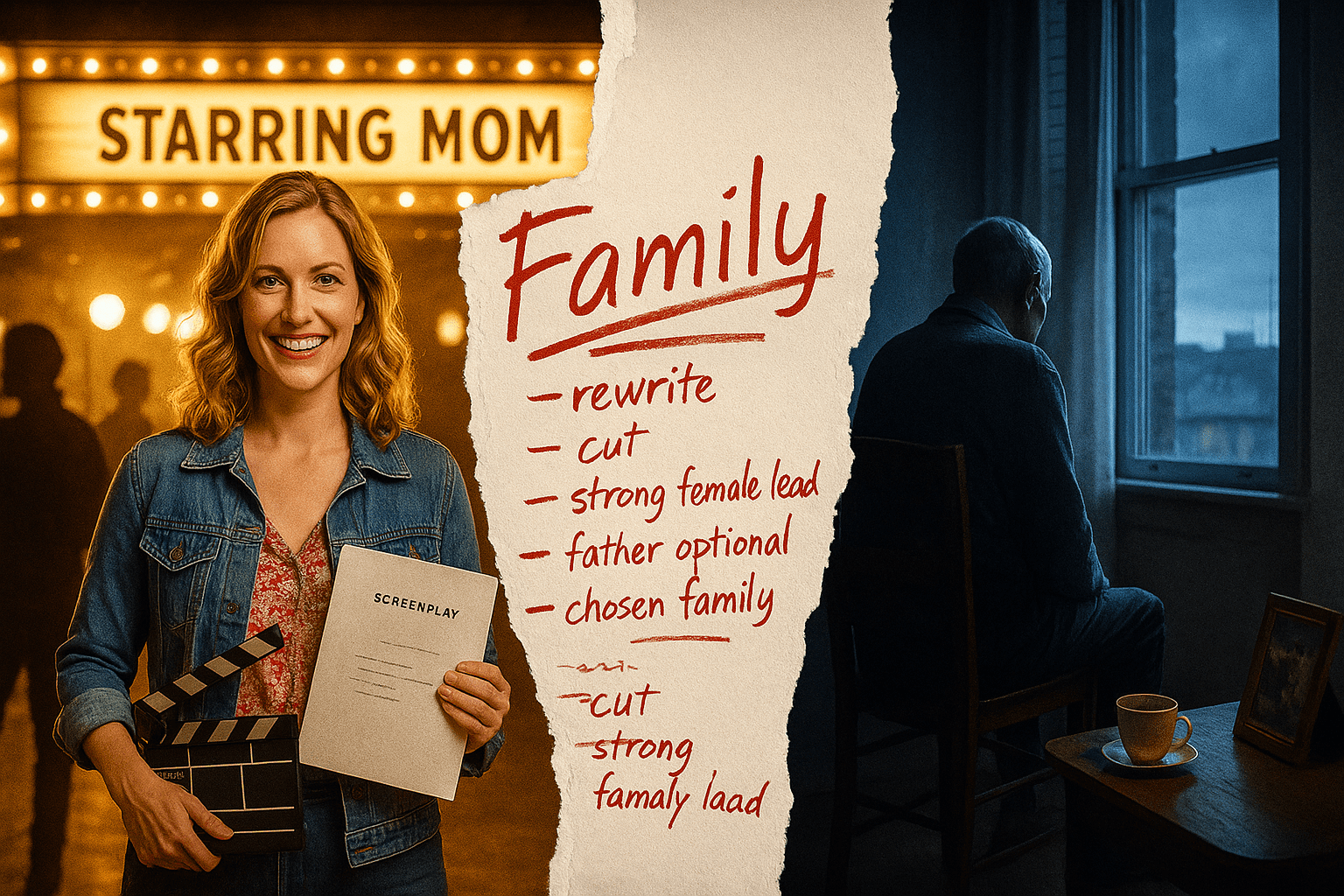
You know what? It is not subtle anymore. The biggest storytellers in America keep selling the same package. The single mom as the icon. The boss babe as the hero. Dad as a punchline, a sperm donor, or a problem to overcome. Marriage is flexible, optional, or a relic. The message is clear enough for a middle schooler. Traditional family, step aside.
I am not mad at any one film. I am looking at the pattern. Culture is a drumbeat. Movies, streaming, influencers, classroom posters. The beat says: you do not need a father, motherhood is a personal brand, and the word patriarchy is the villain in every act. That drumbeat did not start in a Hollywood writers room. The theory was on paper long before the studio notes.
From theory to prime time
Marx and Engels said it out loud. In the Communist Manifesto they target the bourgeois family and tie it to capital and private gain. They talk about the abolition of the family in a future order that breaks inheritance and private property. That is the frame. Family is not sacred, it is a class machine. (Marxists Internet Archive)
Engels took it further in “The Origin of the Family, Private Property and the State.” He linked monogamy to property and power, and treated the nuclear home as a historical stage to move beyond. When early Bolsheviks got power, they ran the play. They secularized marriage, made divorce easy, legalized abortion in 1920, and tried to shift cooking, washing, and child care into public systems. The Zhenotdel, a party women’s department, pushed campaigns to make private family life less central. Then the state yo-yoed back under Stalin when the social costs bit hard. It was not a secret. It was written down, then tried in real life. (Encyclopedia Britannica)
So when people say there is no “anti-family” strain in left ideology, I point to the text and the history. The family was a target because the family competes with the state for loyalty, resources, and identity.
Kate Millett, her sister’s story, and the line into mainstream culture
Second-wave feminism then reframed private life as power politics. Kate Millett’s “Sexual Politics” made that lens a best seller in 1970 and pushed the idea that the bedroom and the family are arena and battleground, not refuge. That text helped set the vibe for a generation of activists and writers. Millett worked in NOW’s orbit as an education committee chair.
Mallory Millett, Kate’s sister, later described a 1960s meeting where a call-and-response allegedly pledged to “destroy the American family” by dismantling the patriarch and monogamy. That account circulates widely in conservative and religious media. It is a claim from a single source, not a transcript in an archive, but the sentiment maps to the theory we just walked through. Hollywood did not invent that tone. It amplified it. (The Father's Rights Movement)
The island musical that made it feel cute
“Mamma Mia” is a fun jukebox fantasy. It is also a clear blueprint. Independent mom. No father in sight. Daughter shops for a dad like she is scrolling a menu. In the end, nobody needs paternity to define family. The crowd cheers. Confetti. Credits. That is not an accident. It is the culture telling you that a father is optional, even quaint. And it is one of many titles with the same spirit. (Rotten Tomatoes)
Look around. “Erin Brockovich.” “Baby Boom.” “Waitress.” “Where the Heart Is.” The beats repeat. A woman against the system, often without a husband, sometimes with a child in tow, proving she can carry it all. Sometimes the dad returns. Sometimes he is a reward for the credits. The point is survival without him, not life with him.
Do some of these stories inspire? Sure. People overcome hard things. My argument is not that you cannot root for a strong woman. My argument is that one model dominates, and the industry keeps doubling down while research groups cheerlead the trend and lobby for more of it. Even the Geena Davis Institute, which does careful media audits, says the industry has reached gender parity for leads in family films and now aims to “rewrite motherhood” on screen. That is an agenda. They say it out loud. (Geena Davis Institute)
But does it matter?
Stories matter. Kids eat narratives long before they touch policy. The same groups show that portrayals of mothers are curated, tidy, and often detached from the messy work of real care. When you normalize the single path and flatten dads into props, you train expectations. It is like watering down your whiskey. Same glass, less kick. (Geena Davis Institute)
You can feel the shift in the numbers too. The United States total fertility rate fell to about 1.62 in 2023 and about 1.60 in 2024. Replacement is 2.1. Many rich countries are sliding under 1.4, the UN’s red zone for rapid population decline and hard aging. This is not a vibe, it is a line graph. (NCBI)
As birth rates stay low and people age, the old-age dependency ratio climbs. In the OECD, it rose from 19 percent in 1980 to 31 percent in 2023 and is projected to hit about 52 percent by 2060. That means fewer workers per retiree, more strain on pensions, health care, and the informal care network. In plain English, fewer adult kids to check on grandma. (OECD)
Who fills the gap today? Families, mostly unpaid. In the United States, around 38 to 63 million people are providing unpaid eldercare, and across the OECD about 60 percent of older people who get help at home receive only informal care. That is heroic. It is also fragile. When your culture trains people to delay family or avoid it, the pool of caregivers shrinks. The state then steps in with programs that never quite keep up. Paying taxes for this is like handing the town drunk your wallet and hoping he buys groceries instead of whiskey. (Bureau of Labor Statistics)
You can see the extreme case in places like Japan. Record aging, more seniors living alone, and a surge of solitary deaths. It is bleak. It is also a warning. If we dismantle family bonds in the name of liberation, the market and the ministry will not love your parents like you do. (Reuters)
But wait, are movies to blame for birthrates?
No single thing drives fertility. Costs, housing, wages, trust in the future, faith, and yes, culture. This is a stew. My point is not to cherry pick one driver. My point is to call out a coordinated story that tells young people the family is a trap and dad is a joke, while the math shows we need more families and more care, not less. Culture is the on-ramp to policy. The theory aims at the family. The drumbeat normalizes it. The numbers lock it in.
What I am for
I am not saying ban movies. I am not saying shame single parents. Many are heroes. I am saying stop pretending the culture is neutral. It is not. And if you are tired of being lectured by people who think the state is your parent, then build something better in your home, your church, your neighborhood, your business.
Practical steps:
• Tell better stories. Celebrate mothers without making them mascots for a politics degree. Put married fathers on screen who lead with service, not swagger. Give kids examples worth copying. (Geena Davis Institute)
• Stop taxing family time. Kill marriage penalties, expand child tax relief that lets families keep their own money, and strip licensing rules that block in-home child care, tutoring, and micro-schools. Let voluntary exchange do its work.
• Rebuild civil society. Mutual aid beats bureaucracy. Your community can stand up meal trains, respite co-ops, and elder check-ins faster than a state agency can find a clipboard.
• Respect tradeoffs. Work is good. So are babies. When the only script for a young woman is “climb hard, maybe kids later,” do not be shocked when later becomes never. The costs are real. So are the joys.
The family is not a primitive holding tank for patriarchy. It is the smallest, freest unit of self-government. Break it, and you do not get paradise. You get lonely elders, overrun systems, and a horizon with fewer little feet.
Where Hollywood fits
Hollywood can keep making boss babe flicks and cute fatherless musicals. Free country. But it should not be surprised that many of us will stop paying for sermons that treat fathers like malware and motherhood like weakness. Call it what it is. A narrative that lines up very neatly with a long paper trail that treats the family as a rival to power. The Fed is like a carnival barker with a money printer, and Hollywood is the house band. The song is catchy. The bill is coming.
Receipts, not vibes
• Communist texts target the bourgeois family and imagine its abolition with the end of private property. Early communists turned that into secular marriage, easy divorce, abortion legalization in 1920, and a push to socialize housework through party organs like the Zhenotdel. (Marxists Internet Archive)
• Second-wave theory mainstreamed the idea that private life is political. Kate Millett’s “Sexual Politics” is exhibit A, and she worked in NOW’s education arm, though she was not a founder. Mallory Millett’s infamous meeting “litany” is a single-source recollection that aligns with the broader theory but is not an official NOW document. (Encyclopedia Britannica)
• Pop culture reflects and pushes the script. “Mamma Mia” is the glossy template that treats fatherhood as optional and chosen family as superior to blood. Industry advocates now openly campaign to “rewrite motherhood” on screen. (Rotten Tomatoes)
• The demographic facts are not friendly. Fertility in the U.S. sits around 1.60 to 1.62. Many rich countries have fallen under 1.4. Aging is speeding up, and the care load is shifting to fewer adult children and a tired informal network. (NCBI)
If you want a healthy society, you do not mock the people who make it. You honor mothers. You expect fathers to show up. You build families that can carry weight. Because when family fails, the state grows. And that trade never pays.
Sources
- Communist Manifesto, Chapter 2, “Abolition of the family”
https://www.marxists.org/archive/marx/works/1848/communist-manifesto/ch02.htm - Britannica, Engels, “The Origins of the Family, Private Property, and the State”
https://www.britannica.com/topic/The-Origins-of-the-Family-Private-Property-and-the-State - Britannica, Abortion overview, Soviet legalization in 1920
https://www.britannica.com/science/abortion-pregnancy - University of Toronto paper on Zhenotdel
https://utoronto.scholaris.ca/bitstreams/044d664b-9a1e-45f6-bb45-3018aa1135c2/download - Britannica, Kate Millett biography
https://www.britannica.com/biography/Kate-Millett - National Organization for Women, Founders list
https://now.org/about/history/honoring-our-founders-pioneers/ - Mallory Millett account of the “litany”
https://tfrm.org/marxist-feminisms-ruined-lives/ - Geena Davis Institute, “Rewrite Motherhood” report page and release
https://geenadavisinstitute.org/research/rewriting-motherhood-how-tv-represents-moms-and-what-we-want-to-see-next/
https://geenadavisinstitute.org/moms-first-and-the-geena-davis-institute-on-gender-in-media-release-new-report-on-the-cultural-portrayals-of-motherhood-on-tv-call-on-entertainment-industry-to-rewrite-motherhood/ - “Mamma Mia!” synopsis
https://www.rottentomatoes.com/m/mamma_mia - CDC NCHS, U.S. births and fertility 2023 and 2024
https://www.ncbi.nlm.nih.gov/books/NBK618136/
https://www.cdc.gov/nchs/data/vsrr/vsrr038.pdf - UN World Fertility Report 2024, low fertility warning
https://www.un.org/development/desa/pd/sites/www.un.org.development.desa.pd/files/undesa_pd_2025_wfr_2024_final.pdf - OECD, Old-age dependency ratio and Employment Outlook 2025
https://www.oecd.org/en/data/indicators/old-age-dependency-ratio.html
https://www.oecd.org/en/publications/2025/07/oecd-employment-outlook-2025_5345f034.html - BLS, Unpaid Eldercare in the United States 2023–2024
https://www.bls.gov/news.release/pdf/elcare.pdf - OECD, Supporting informal carers
https://www.oecd.org/en/publications/supporting-informal-carers-of-older-people_0f0c0d52-en.html - Reuters, Japan’s elderly living alone to jump 47% by 2050
https://www.reuters.com/world/asia-pacific/japans-elderly-population-living-alone-jump-47-by-2050-research-2024-04-12/

Spun Web Technology SMART SEO