

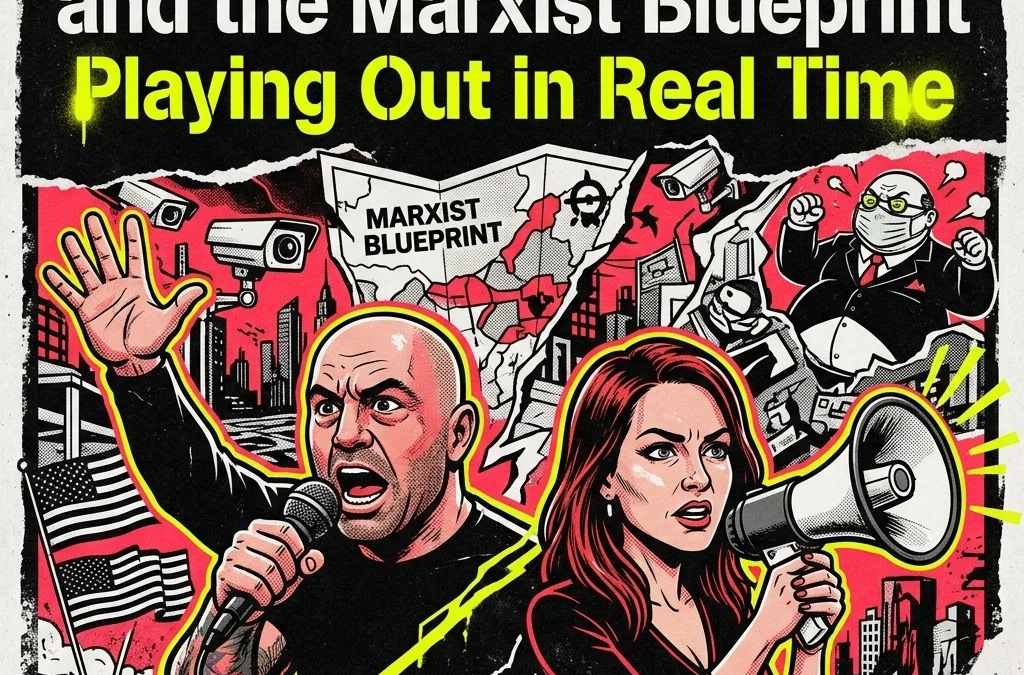
Commentary by Ryan “Dickie” Thompson
I sat through the full episode of The Joe Rogan Experience #2460, and I’m telling you straight, this one sticks with you.
Not because it’s polished. Not because it’s safe.
Because it connects dots most people don’t want connected.
Rachel Wilson is not just talking about feminism. She’s talking about something deeper. A shift in how society is structured, how families work, and how power moves. And if you’ve been paying attention, not just reading books but living life, you can feel it.
I can.
A lot of what she said hit close to home. Not abstract. Not theoretical. Real.
The Split Reality Problem
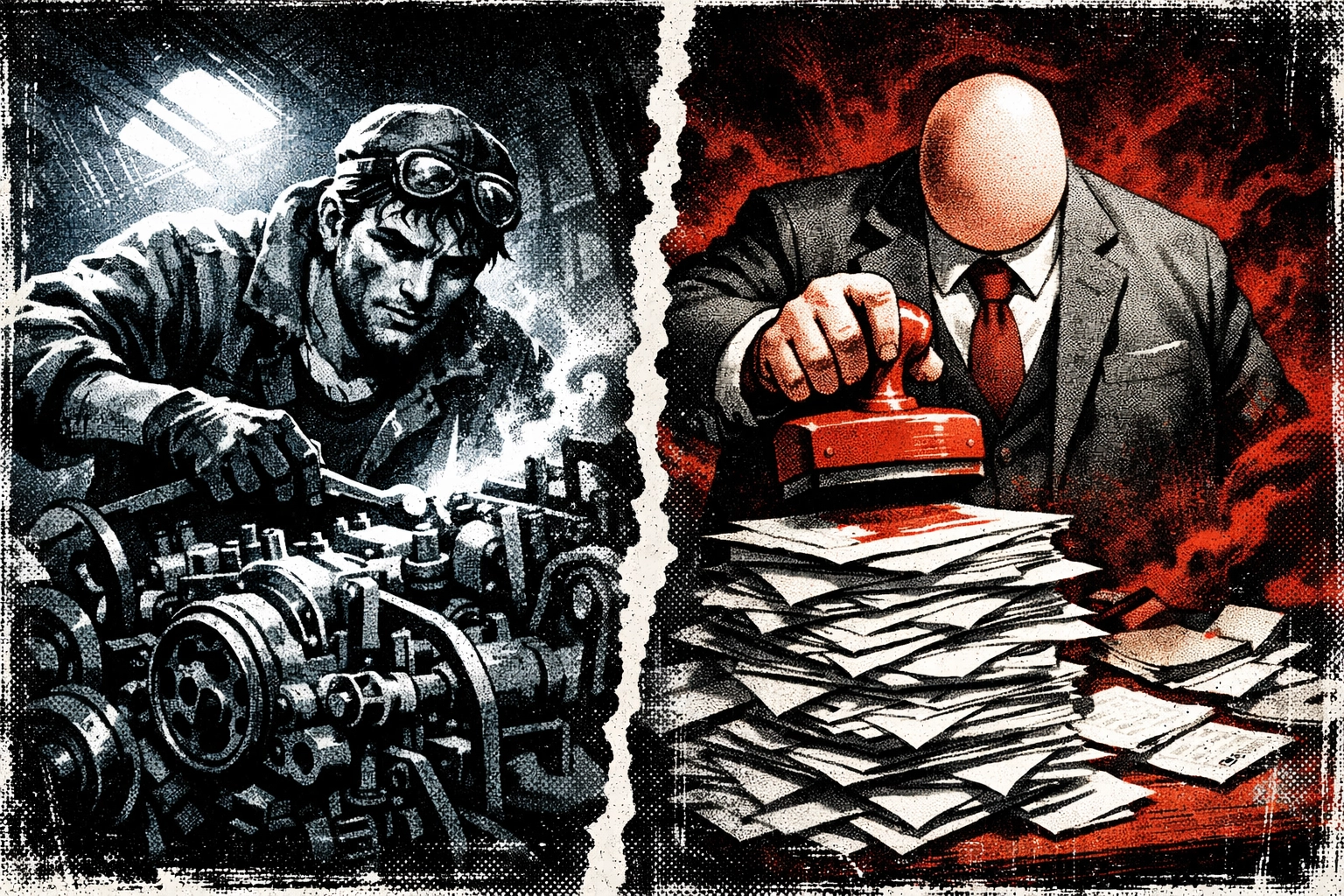
One thing that stood out early in the conversation was how Wilson grew up between two worlds. One parent grounded in work, responsibility, building something. The other rooted in Marxist thinking, resentment, and this constant sense of injustice.
That contrast matters.
Because that is not just her story. That is modern America in a nutshell. You’ve got two competing systems:
- One built on effort, trade, and personal responsibility.
- One built on grievance, redistribution, and ideological struggle.
And people bounce between them trying to figure out what’s real. That tension shows up in the transcript too. You can hear it clearly when she talks about seeing how effort actually plays out in real life, even as a kid. That’s something no theory can override.
Reality always wins. Whether you're looking at the incredible work ethic often seen in immigrant communities or the slow decay of the rust belt, the results don't lie.
Cultural Marxism: The Long Game
Let’s talk about the thing most people avoid: Cultural Marxism.
Not the buzzword version. The real one.
When you go back to The Communist Manifesto, Marx was not just talking about economics. He was talking about restructuring society from the ground up. And one of the biggest obstacles to that?
The family.
Marx and Engels wrote openly about the need to dissolve traditional family structures. Not necessarily overnight, but over time. Why? Because the family is a decentralized unit. It creates:
- Loyalty outside the state.
- Economic independence.
- Cultural continuity.
If you want centralized control, you cannot have strong families. So what do you do? You don’t attack the family directly. That would fail. You reshape culture. Slowly.
Enter Feminism as a Vehicle
This is where Rachel Wilson’s argument lines up with history in a way that’s hard to ignore. She’s saying feminism, especially in its later waves, became a tool for that cultural shift.
Not necessarily at the start for everyone involved. But over time, the direction becomes clear. Look at the pattern:
- Move women out of the home and into the workforce.
- Redefine motherhood as optional or even limiting.
- Reframe family roles as oppressive structures.
- Replace community with institutions.
She even talks about how doubling the workforce changed the entire economy. That’s not a small change. That’s a system rewrite.
From a libertarian perspective, this is where it gets real. Because when both parents have to work just to survive, you don’t get independence. You get dependency. You become dependent on schools, daycare systems, government programs, and corporate structures.
That is not freedom. That is managed life.

The Workforce Shift and Economic Reality
Here’s something people don’t want to admit. When you double the labor pool, wages don’t magically double. They flatten.
Wilson points this out clearly in the conversation. Once women entered the workforce at scale, household income didn’t rise the way people expected. Instead, it became necessary to have two incomes just to maintain the same standard of living.
That’s a trap. And now we’re stuck in it.
This is not about blaming women. That’s lazy thinking. This is about incentives. You change the structure, you change the outcome. When the state incentivizes the breakdown of the home through tax codes and “liberation” rhetoric, the state is the one that wins the resulting power vacuum.
Early Marxists and the Strategy of Cultural Infiltration
If you read early Marxist thinkers beyond just Marx, people like Engels and later theorists, the strategy becomes clearer. Economic revolution didn’t work cleanly in the West. So the focus shifted from class struggle in factories to cultural struggle in institutions.
Schools. Media. Academia. Sound familiar?
That’s where ideas get planted. And once those ideas become normalized, people defend them without even realizing where they came from. Wilson talks about how history itself was rewritten in women’s studies programs. That’s not conspiracy. That’s power.
Control the narrative, control perception. Whether it's the DOJ using surveillance to keep tabs on dissent or academic departments purging “problematic” history, the goal is the same: centralized management of the human mind.

The Family as the Target
Let me say this plainly. If you weaken the family, everything else becomes easier to control. You get more isolated individuals, more reliance on systems, and less generational stability.
That’s not theoretical. Look around. We’ve got record low birth rates, high divorce rates, and rising loneliness. And people still act like this is progress.
It’s not that simple.
My Take on Polygamy
Now here’s where I’m going to lose some people, but I’m going to be honest anyway.
I favor polygamy.
Not as a forced system. Not as some rigid structure. As an option. I’ve even tried it, briefly.
And here’s what I realized. Human relationships are more complex than the modern system allows. Monogamy, at least in its current rigid, legal form, is not the only way humans have organized relationships. Historically, polygamy shows up across cultures, across time. Long before modern marriage laws.
That matters. It tells you something about human nature.
Now, does that mean polygamy is easy? No. It’s complicated. It requires honesty, structure, and emotional control most people don’t have. But so does monogamy, if we’re being real.
The point is not that one system is perfect. The point is we’ve been sold the idea that there is only one acceptable model, and everything else is fringe or immoral. That’s not a free society. That’s cultural enforcement.
What Rogan Gets Right
Joe Rogan plays an important role here. He doesn’t pretend to have all the answers. He listens. He questions. He pushes back just enough.
That creates space for ideas to actually be explored. And in this episode, you can hear him wrestling with it, especially around women voting, family structure, and economic shifts. He’s not fully buying everything, but he’s not dismissing it either.
That’s how real thinking happens. We need more of that and less of the “kill switch” mentality aimed at shutting down uncomfortable conversations.
Where This Leaves Us
Here’s the uncomfortable truth. We are living inside a cultural system that was built over decades. Not overnight. And not always intentionally by every person involved.
But the direction is clear:
- Less family cohesion.
- More institutional dependence.
- More ideological framing of identity.
That lines up a little too well with early Marxist goals to just ignore. Does that mean everything is some grand plan? No. But it does mean ideas have consequences. And we are seeing them now.
Why I Recommend Rachel Wilson’s Book
You should read Occult Feminism: The Secret History of Women's Liberation.
Not because it’s perfect. Because it forces you to question things you’ve probably never questioned. And if you care about liberty, real liberty, not just slogans, you need to understand how culture shapes outcomes.
Politics comes later. Culture comes first. Always.
Final Thought
This episode is not about going backward. It’s about asking:
Joe Rogan on feminism, polygamy, communism
- What actually works?
- What creates stable, free, functional societies?
- And what happens when we tear those systems down without fully understanding why they existed in the first place?
That’s the real conversation. And it’s one we need to keep having.
Stay disruptive.
Sources & References:
- The Joe Rogan Experience #2460 – Rachel Wilson.
- Wilson, Rachel. Occult Feminism: The Secret History of Women's Liberation.
- Marx, Karl and Engels, Friedrich. The Communist Manifesto.
- U.S. Bureau of Labor Statistics – Historical Women's Labor Force Participation Data.
- Edward Griffin Explains Communism. youtube
- What You're Not Told About Margaret Sanger & Planned Parenthood | Hayden Ludwig
- Revealed; The Secret Goals of Feminism in the USA – history of N.O.W
- Joe Rogan #2460 Rachel Wilson – Feminism and Marxism

Spun Web Technology SMART SEO