

Introduction
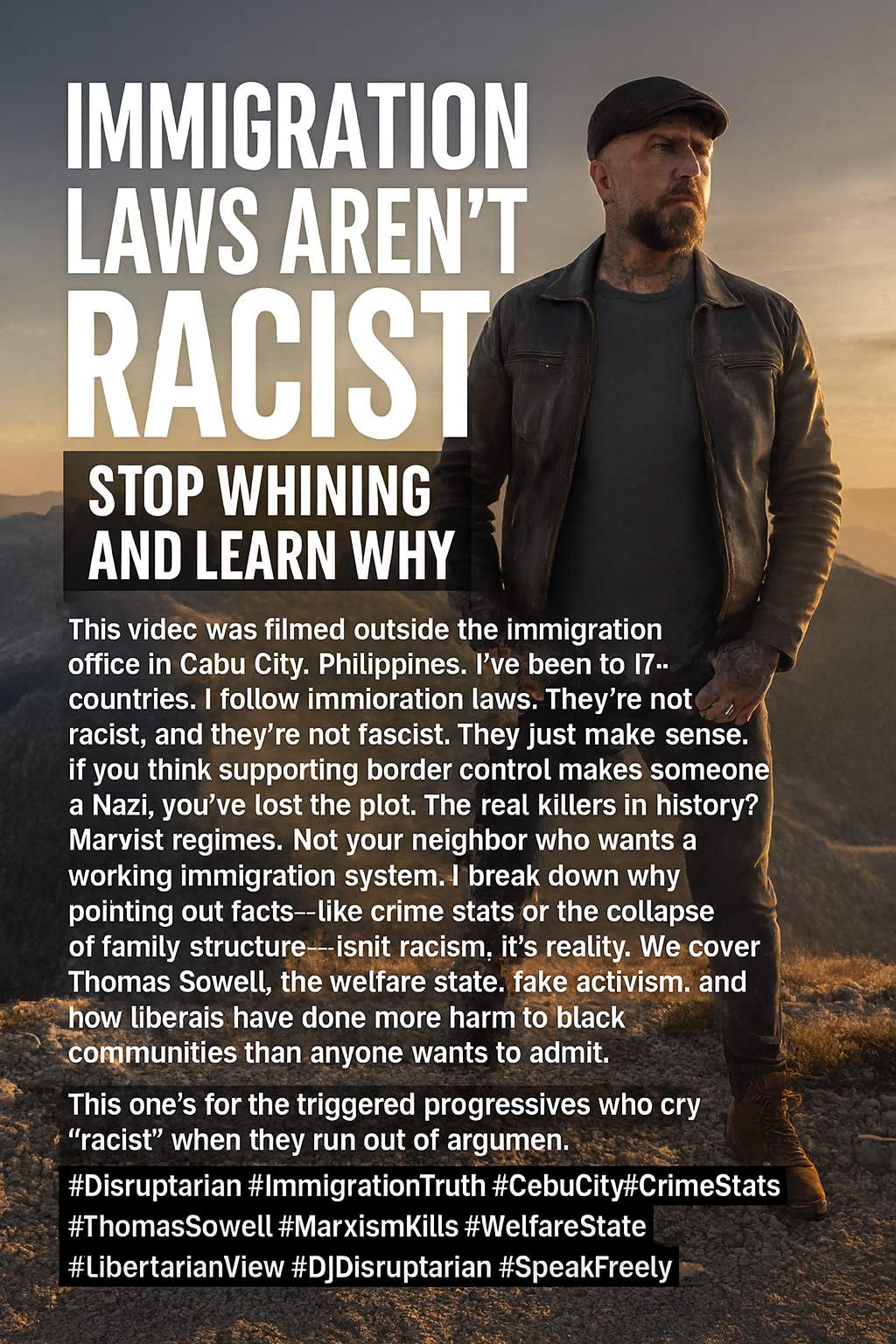
In a video titled “Why Immigration Laws Aren’t Racist — A Libertarian Take,” the speaker films outside an immigration office in Cebu City, Philippines. He explains why immigration laws are necessary and why calling them racist doesn’t hold up. He's been to over 17 countries and followed each country’s immigration rules. His take is simple: borders exist for a reason, and following the law isn’t an act of hate.
The video also covers topics like crime statistics, Marxist regimes, the impact of welfare on family structure, and the misuse of words like “Nazi.” This article takes those arguments apart, looks at the facts, and lays it out clearly.
Real Experience, Not Theory
The speaker starts by grounding his credibility. He says he's traveled to more than 17 countries, including the UK, Mexico, and Ireland, and always followed their immigration laws. That’s key to his argument: immigration rules aren’t racist or unfair if you just follow the process. They exist to help countries manage infrastructure, services, and resources.
Immigration Laws Have a Purpose
He argues that immigration systems are there to help a country stay functional. Without control, he says, there’s chaos. Infrastructure breaks down. Tax systems can’t keep up. Social services stretch thin. Immigration bottlenecks exist not out of hate, but out of necessity. This argument isn’t new and is backed by many legal scholars who agree that border enforcement is part of national sovereignty.
Overusing the Word “Nazi”
One of the speaker’s strongest points is that labeling everyone you disagree with a “Nazi” waters down the meaning of the word. He says calling supporters of immigration laws fascists or racists is dishonest and lazy. Instead of debate, people throw out labels. That kind of rhetoric, he argues, disrespects the real victims of actual fascist regimes.
Marxist Governments and Mass Deaths
The video also dives into history. He claims that Marxist regimes have caused more deaths in the past century than any nationalist policy. He cites examples from the Soviet Union, Maoist China, and Cambodia under Pol Pot. Scholars like Robert Conquest and R. J. Rummel back up those numbers, with estimates reaching into the hundreds of millions. His argument: if you're going to judge ideology by its impact, Marxism has a bloodier record than any conservative immigration stance.
The Crime Statistics Argument
The speaker brings up U.S. crime data and says Black males make up 6.5% of the U.S. population but commit more than 50% of violent crimes. He says these stats aren’t about race, but culture. This point is controversial. The numbers do exist, but criminologists warn against using them without context. Issues like poverty, systemic bias, and education gaps play a big role. Still, he argues that facts shouldn’t be called racist.
Minimum Wage and Welfare Backfire
He says well-meaning policies like the minimum wage can hurt the same communities they’re supposed to help. He brings up economist Thomas Sowell, who has long argued that minimum wage laws can price young or low-skilled workers out of the job market. Historical data supports this, especially for Black teens in the 1940s and 50s when minimum wage laws weren’t strongly enforced due to inflation. In his view, raising the minimum wage and expanding welfare does more harm than good.
Family Breakdown and Social Fallout
Another big argument is about family structure. He points out that kids raised without fathers are more likely to get involved in crime, drugs, and other antisocial behavior. He says welfare programs often reward single-parent households rather than support keeping families together. Studies from groups like the Heritage Foundation support this link between family stability and social outcomes. Critics of this view say family breakdown is a symptom of deeper issues, like mass incarceration and economic inequality.
Calling Out Fake Activists
Near the end, the speaker addresses anonymous critics. He accuses them of deleting their own comments and then blaming him for censorship. His point is clear: if you believe in what you say, put your name on it. Make a video. Write a post. Hiding behind fake accounts while slinging insults adds nothing to the conversation.
Final Thoughts
This video pulls no punches. Some of the arguments are backed by data. Others simplify complicated issues. Still, it taps into a growing frustration with political labels and forced silence. Whether you agree or not, the message is honest: don’t call people racist just because they believe in borders. And don’t ignore the damage done by the policies you support.
The speaker pushes back hard against the narrative that being pro-border is hateful. Instead, he calls for debate based on facts, not feelings. That alone makes the video worth watching.
Sources
- Rudolph Rummel, Death by Government
- Robert Conquest, The Great Terror
- FBI Uniform Crime Reporting (UCR)
- Bureau of Justice Statistics
- Thomas Sowell, Basic Economics
- David Neumark, Minimum Wage Studies (NBER)
- Card and Krueger’s Study on Minimum Wage
- Heritage Foundation on Family Structure
- Migration Policy Institute
- Harvard Law Review: Immigration and Sovereignty

Spun Web Technology SMART SEO