
The Responsibility Switch: A Disruptarian Comic About One Case and Collective Punishment

Comic commentary · Disruptarian · September 6, 2026
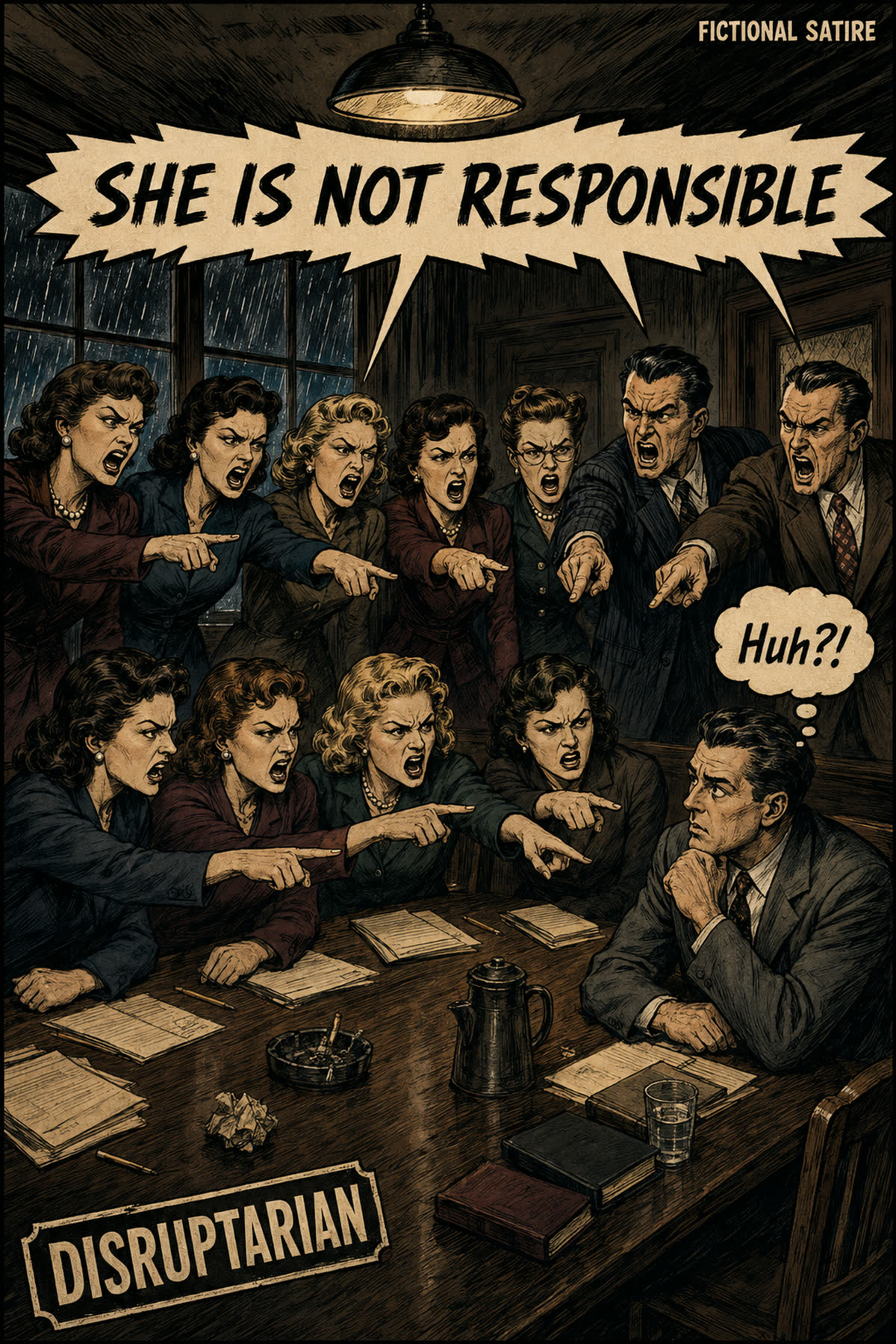
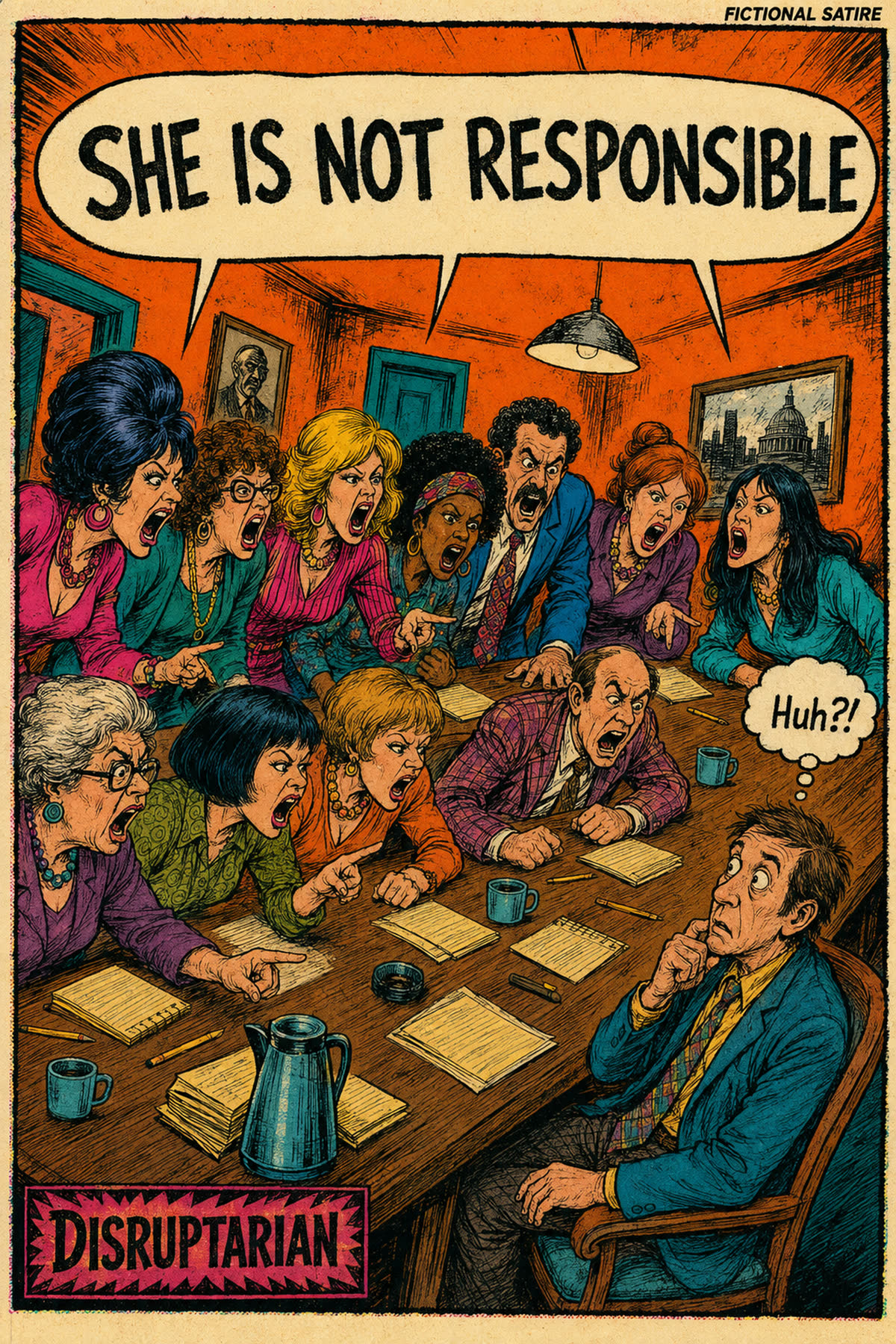
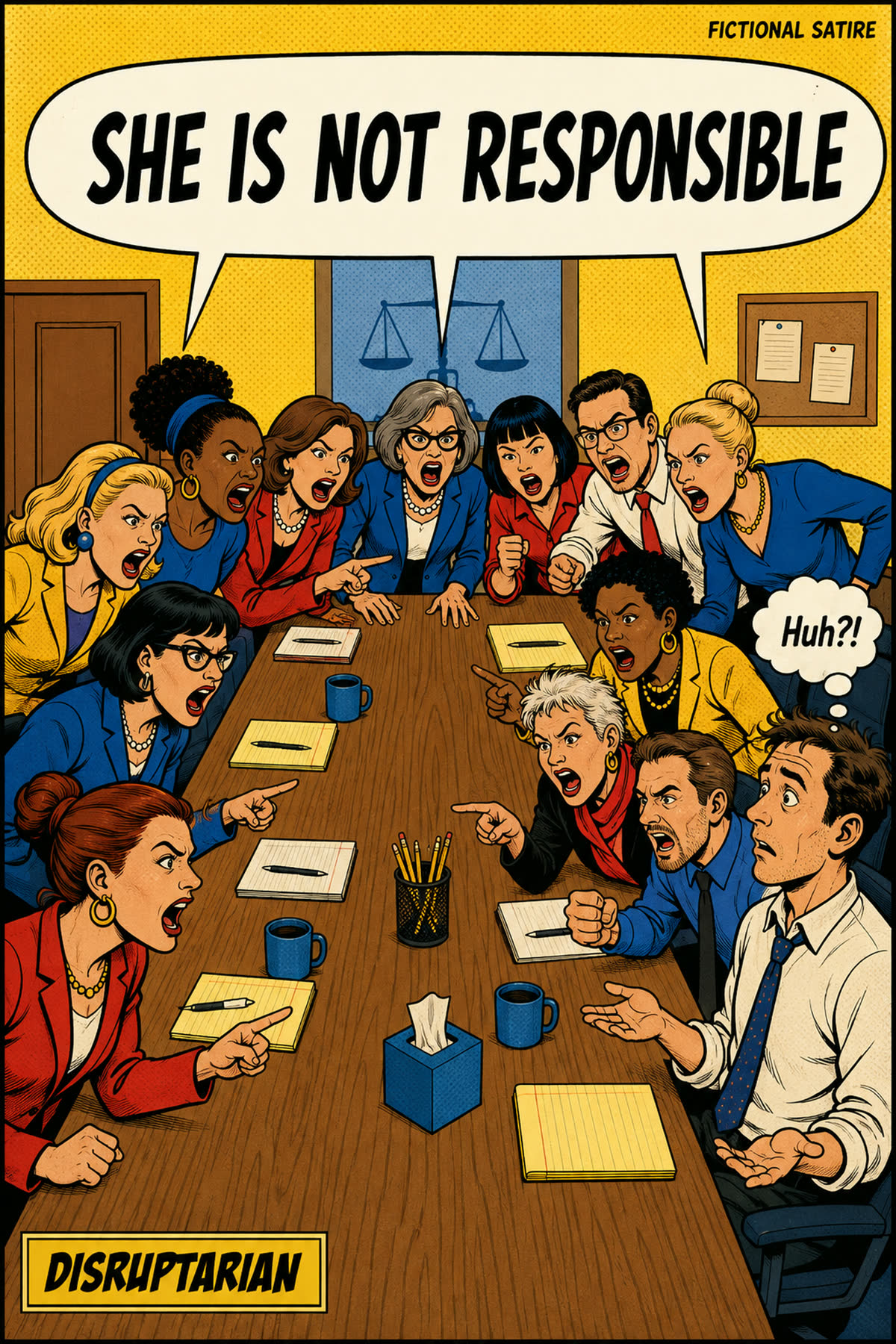
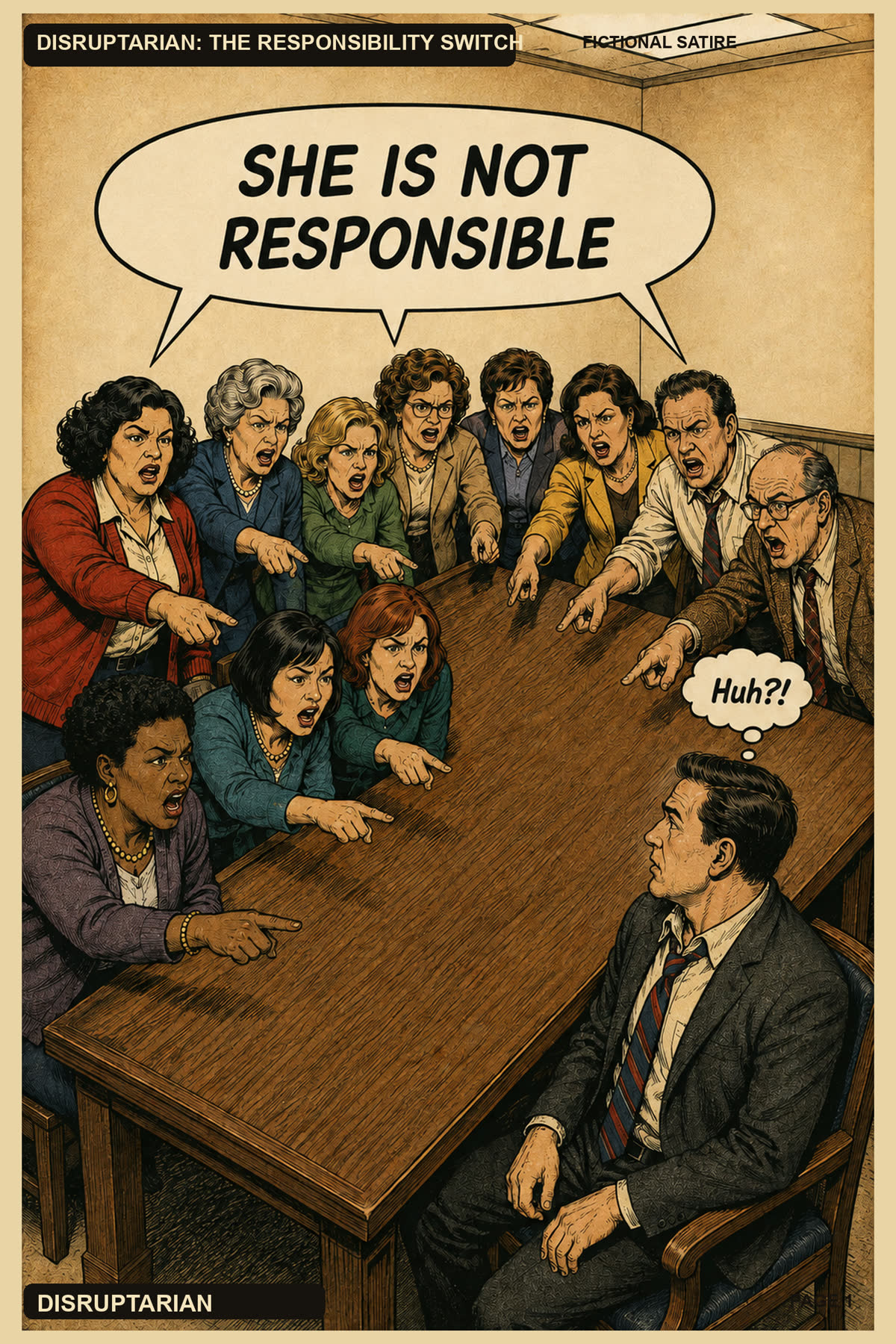
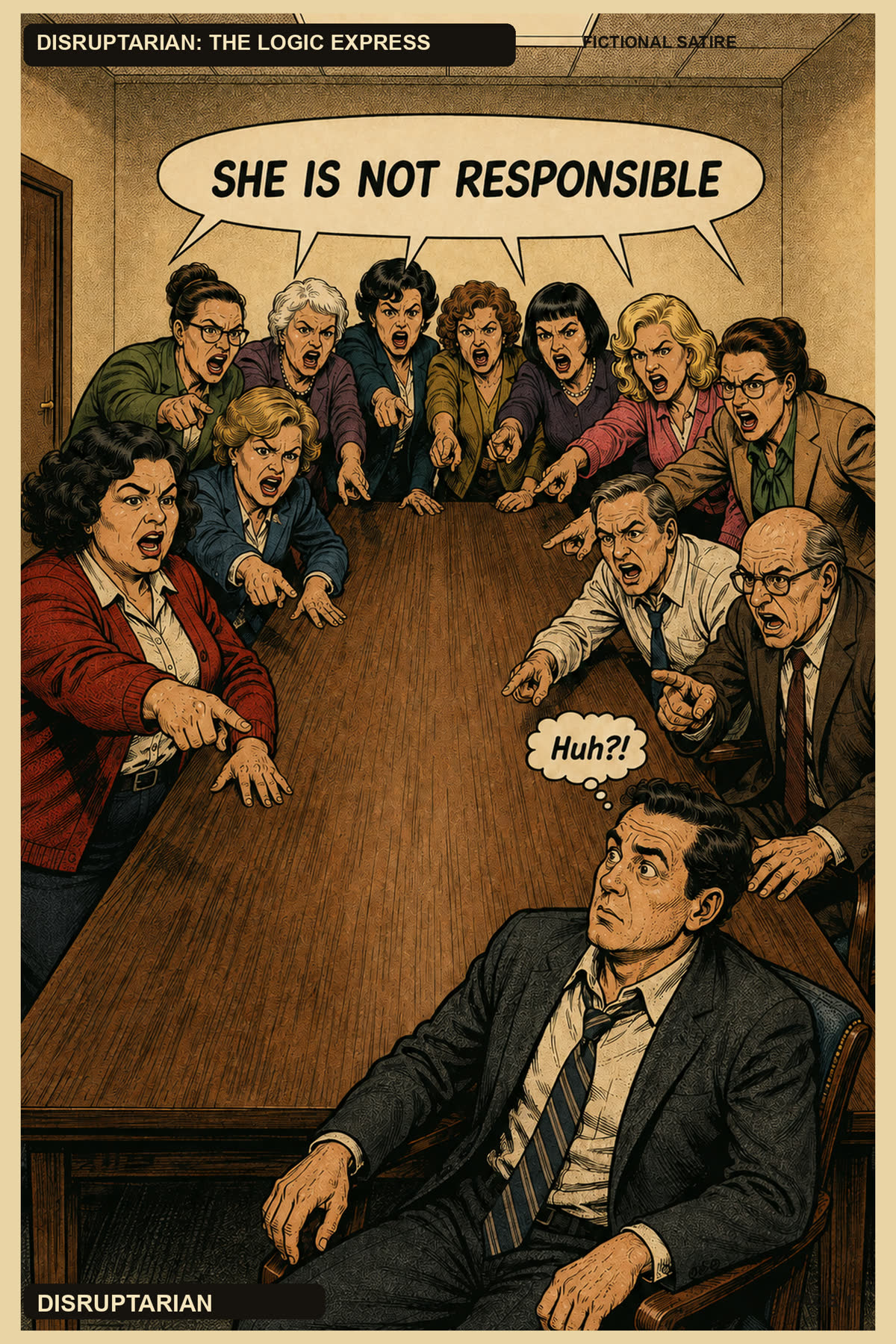
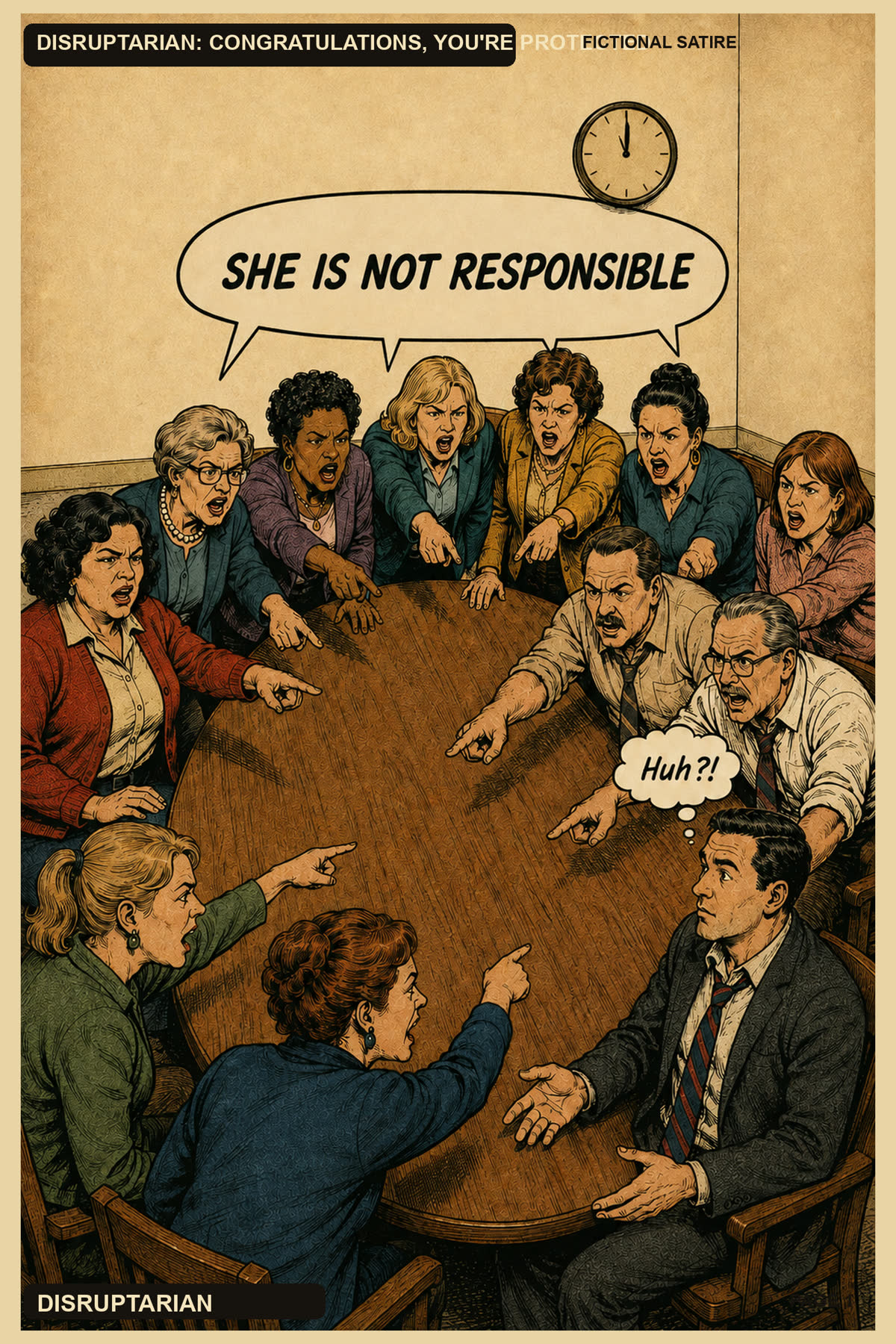
The splash page opens on a fictional jury room drawn in hard shadows and bright anger. Twelve invented jurors crowd a conference table. Nine women and two men lean toward one remaining male juror, their speech balloons fused into one blunt verdict: “SHE IS NOT RESPONSIBLE.” Above the holdout’s head, a tiny thought balloon delivers the entire rebuttal: “Huh?!”
That panel is deliberately loud because the premise is deliberately narrow. It is a comic-book exaggeration of what happens when public argument tries to replace a difficult question with a slogan. The scene is not a portrait of real jurors, a reconstruction of any jury room, or a claim about what anyone in an actual proceeding said. It is a fictional pressure cooker: a table, a chorus, one confused dissenter, and an argument that has already decided it does not need to explain itself.
Then the page turns.
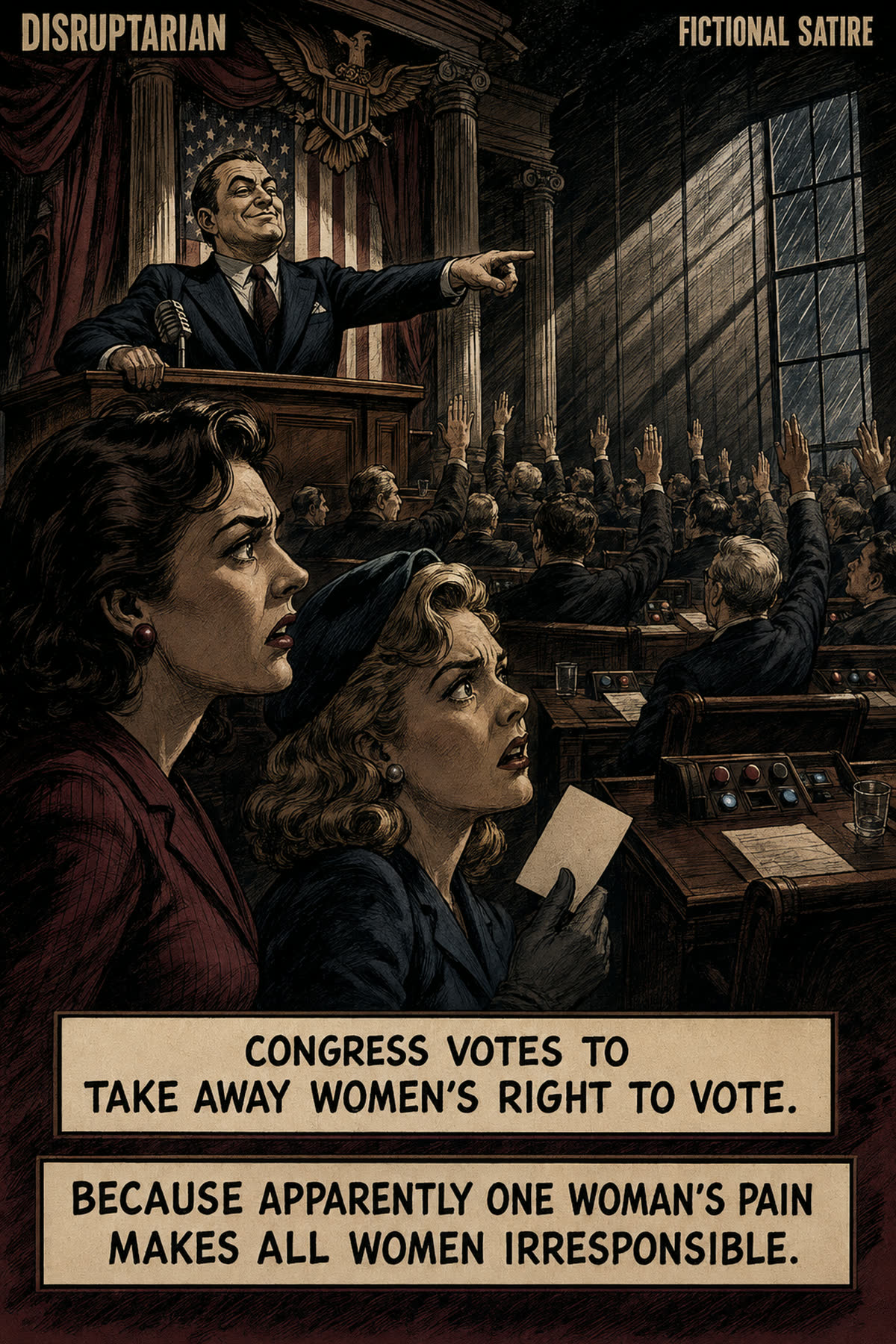
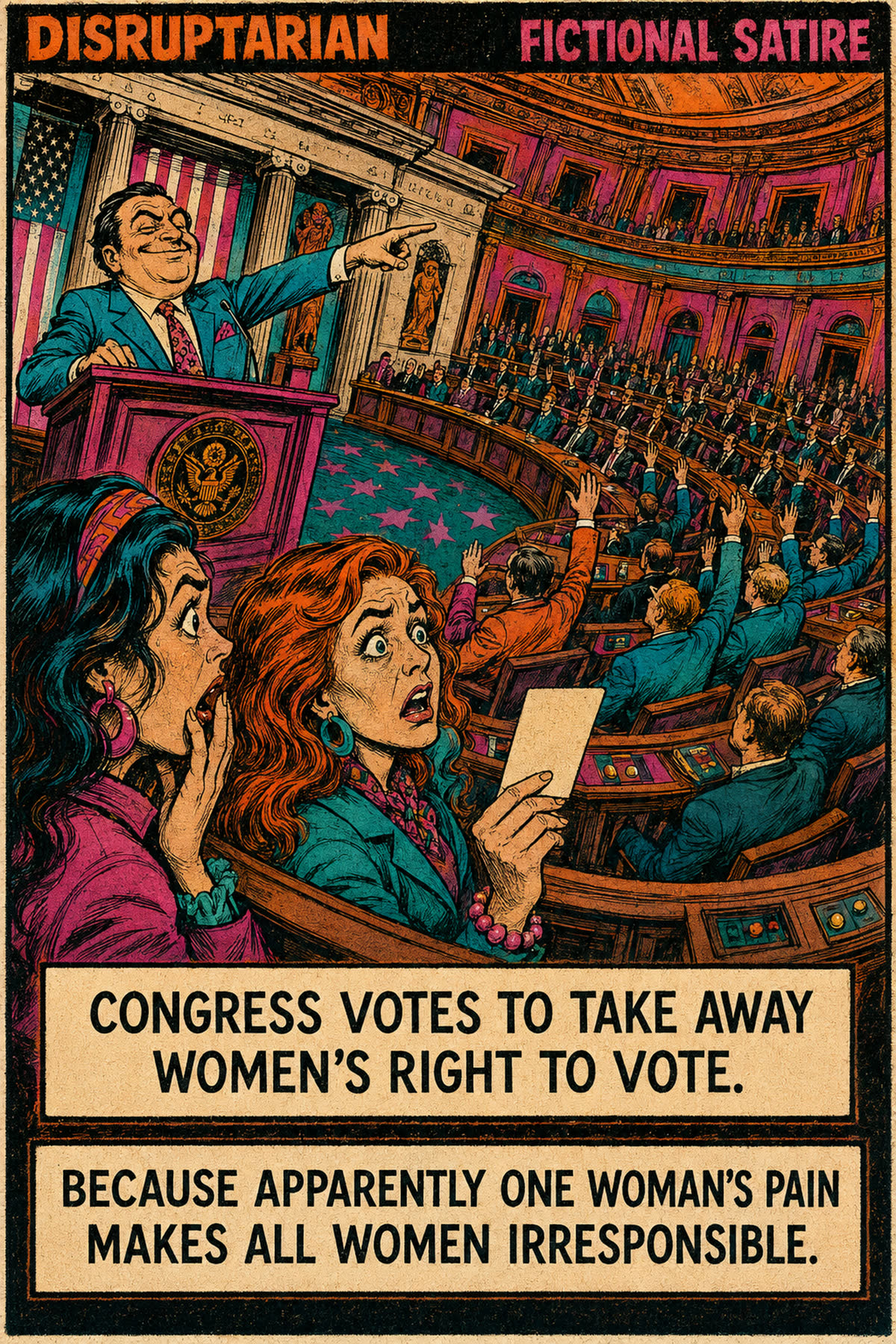
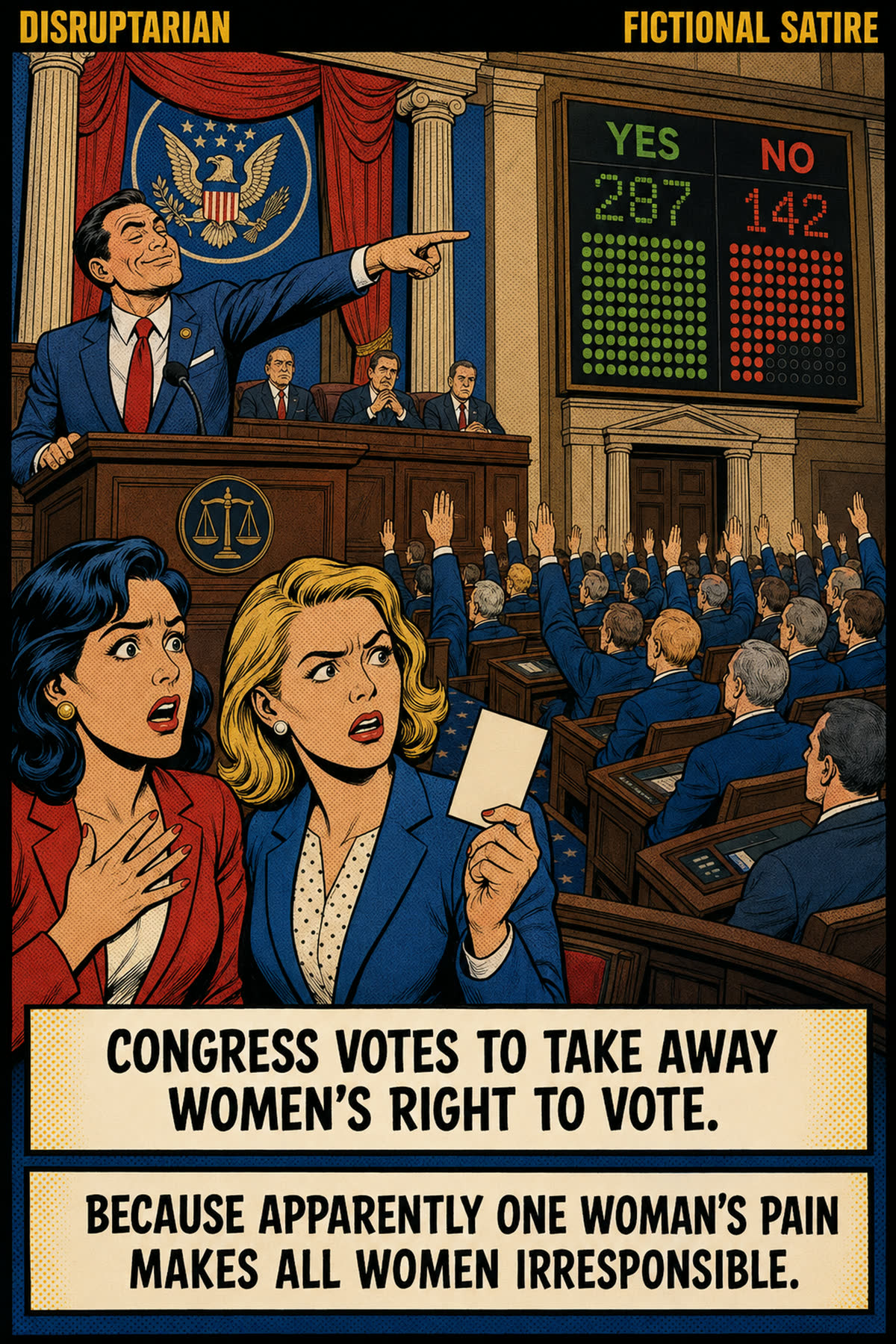
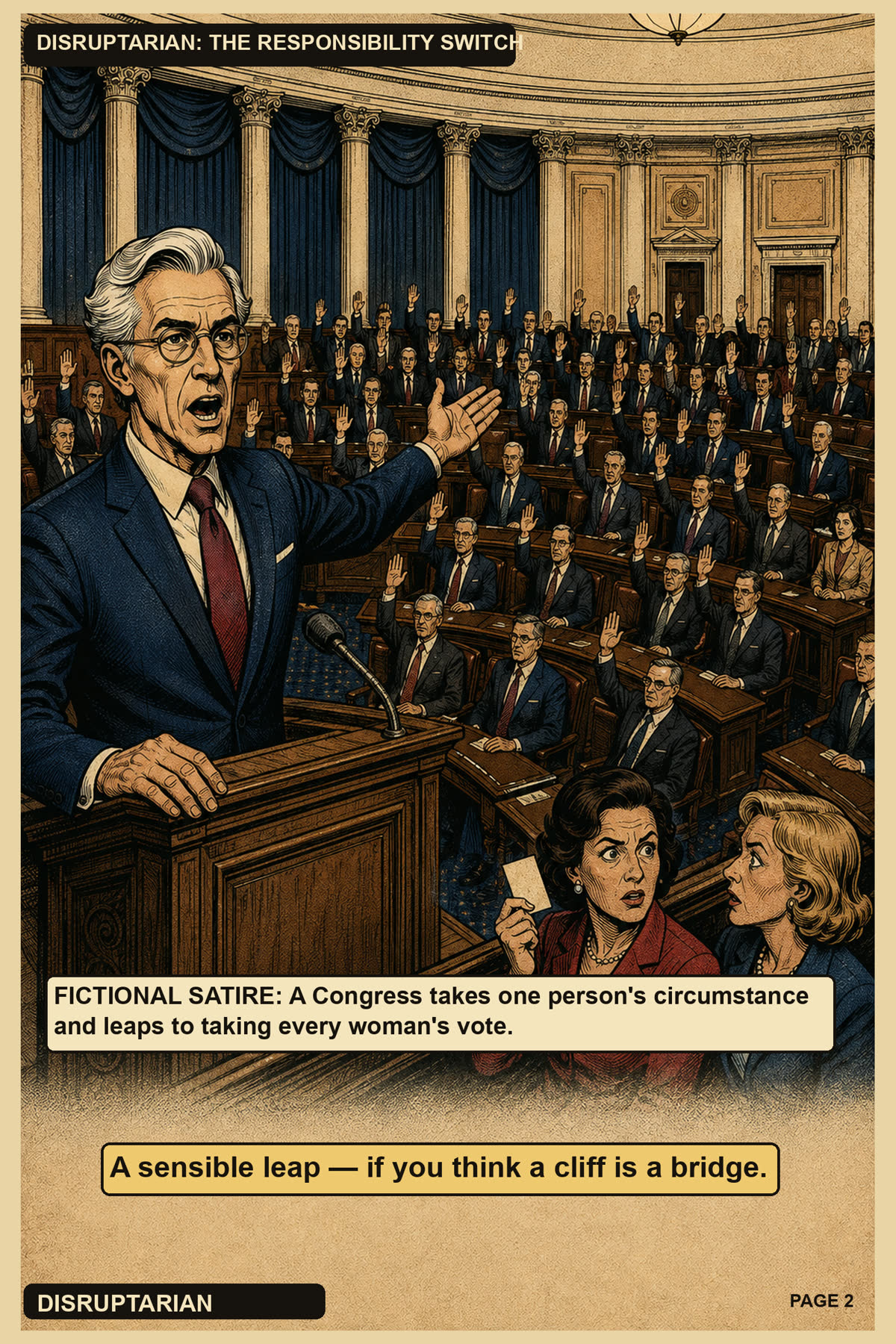
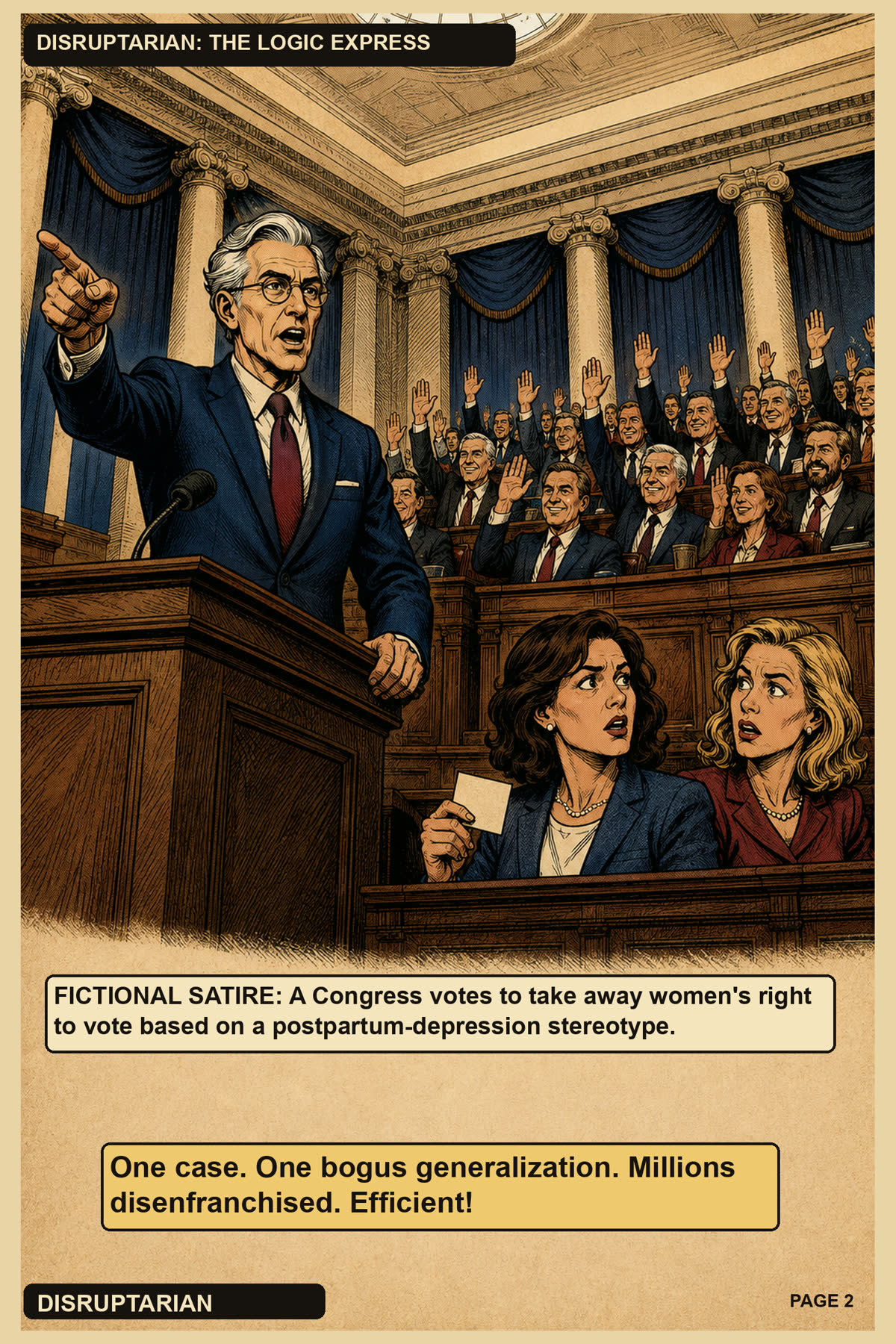
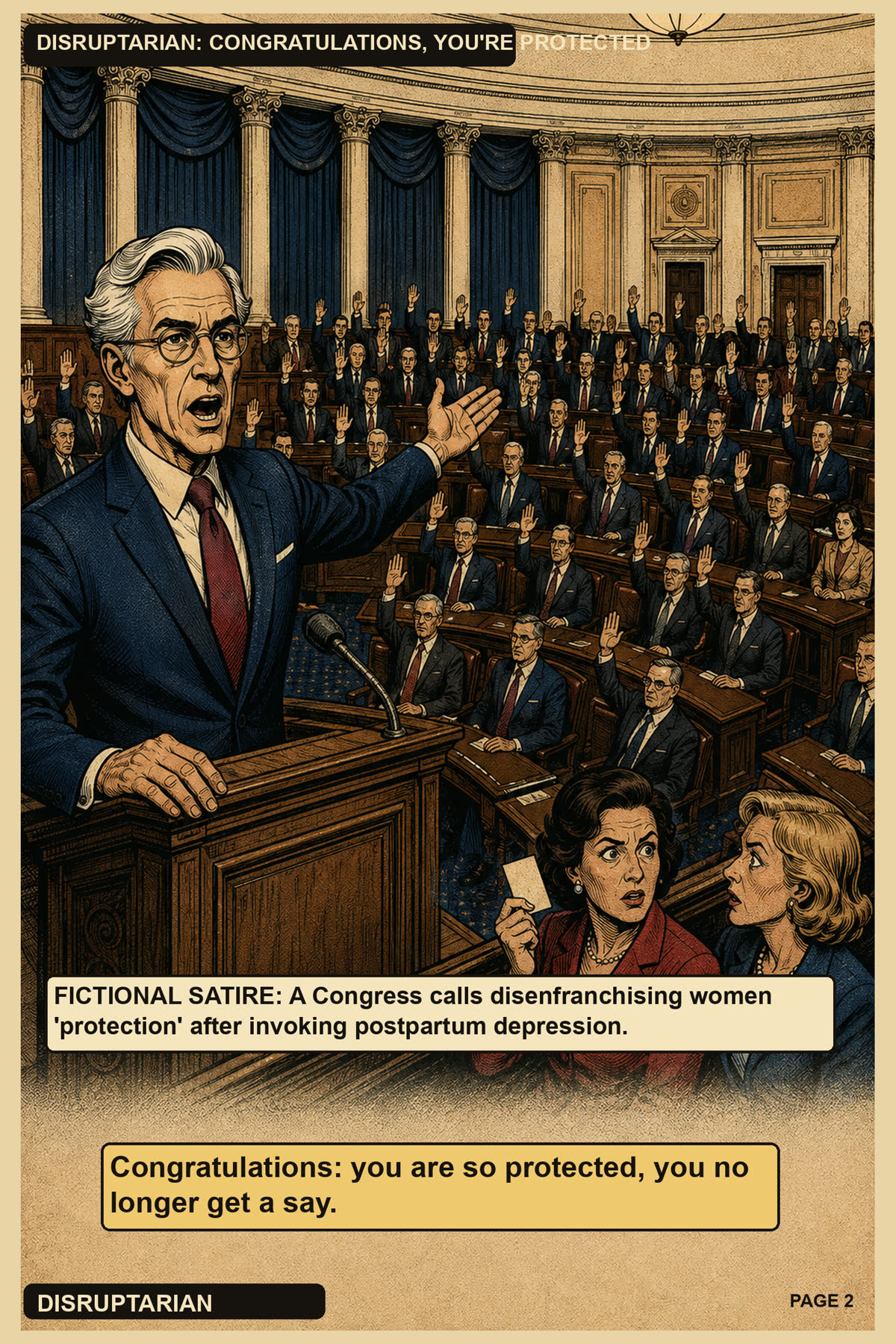
The second scene cuts to a fictional congressional chamber. The same comic logic races to its absurd conclusion: if one woman’s responsibility is debated through the lens of postpartum depression, the chamber announces it can use that subject to take the vote away from women everywhere. The gag is intentionally cruel because the idea is cruel. A personal circumstance becomes a category. A category becomes a stereotype. A stereotype becomes a lever for collective punishment.
That is the “responsibility switch” in the title. Someone starts with a hard, individual question about responsibility. Instead of staying with the facts and process required to answer that question, the argument jumps tracks. It turns into an excuse to treat a whole sex as politically suspect. Comic books are good at showing this move because they can draw the jump as a lightning bolt: one panel contains a messy human problem; the next contains a giant, ridiculous policy machine pretending it reached a sensible conclusion.
The featured meme puts the two panels face to face beneath the line: “ONE CASE. MILLIONS PUNISHED?” It is not asking readers to accept a medical or legal conclusion. It is asking them to notice the shape of an argument. When a political claim needs to turn every woman into a symbol of somebody else’s case, it has stopped dealing with people as individuals.
The jury room is also where the irony lands. Eleven figures shout a conclusion while the twelfth thinks “Huh?!” The joke is not that a verdict must always go one way. The joke is that certainty without an explanation is presented as moral sophistication. In the comic, the baffled juror is the only person still visibly asking what standard is being used, what evidence is being weighed, and why a conclusion about one fictional defendant has suddenly become a referendum on millions of citizens.
The congressional page refuses to let that leap pass as compassion. Reducing women to a theory of irrationality is not care. It is a shortcut for people who want power without the inconvenience of treating each person as a person. The satire pushes that shortcut into an exaggerated chamber vote so that its premise is impossible to miss.
Disruptarian’s comic does not report an actual congressional vote, identify actual jurors, or diagnose any person. It makes no claim about an actual case record, legal outcome, medical evidence, or jury deliberation. The jurors, lawmakers, dialogue, and vote are invented for satirical commentary. The comic’s target is the rhetorical move: use one emotionally charged circumstance to justify a sweeping judgment about everyone who shares a trait.
That is why the last image is a meme instead of a news graphic. The question is the point. One case. Millions punished? The answer should never be automatic.
The full comic storyboard
Read each two-page version from left to right: the jury-room confrontation opens the story, then the second page carries the argument to its conclusion.
Sources and evidence
This article is an original Disruptarian comic commentary built from the accompanying original comic and featured-image meme. It contains no external factual reporting about actual jurors, a real congressional vote, a medical diagnosis, or the status of any proceeding. The depicted jury room and congressional vote are fictional satire.
Related Reading
Similar posts

2026-09-04 · Commentary
Lindsay Clancy Mistrial: “Sad” Is Not an Excuse for Killing Your Children
Mental illness is not automatic immunity. The Clancy mistrial raises hard questions about accountability, legal insanity and the courage to stand alone.
2026-07-09 · Commentary
Tyler Robinson Hearing Day Two: Why Candace Owens Was Right to Ask Questions
Day two of the Tyler Robinson preliminary hearing did not prove a conspiracy or clear Robinson. It did show why citizens and independent media were right to keep asking questions.
2026-08-11 · Radio Shows