
By Ryan “Dickie” Thompson | Disruptarian.com
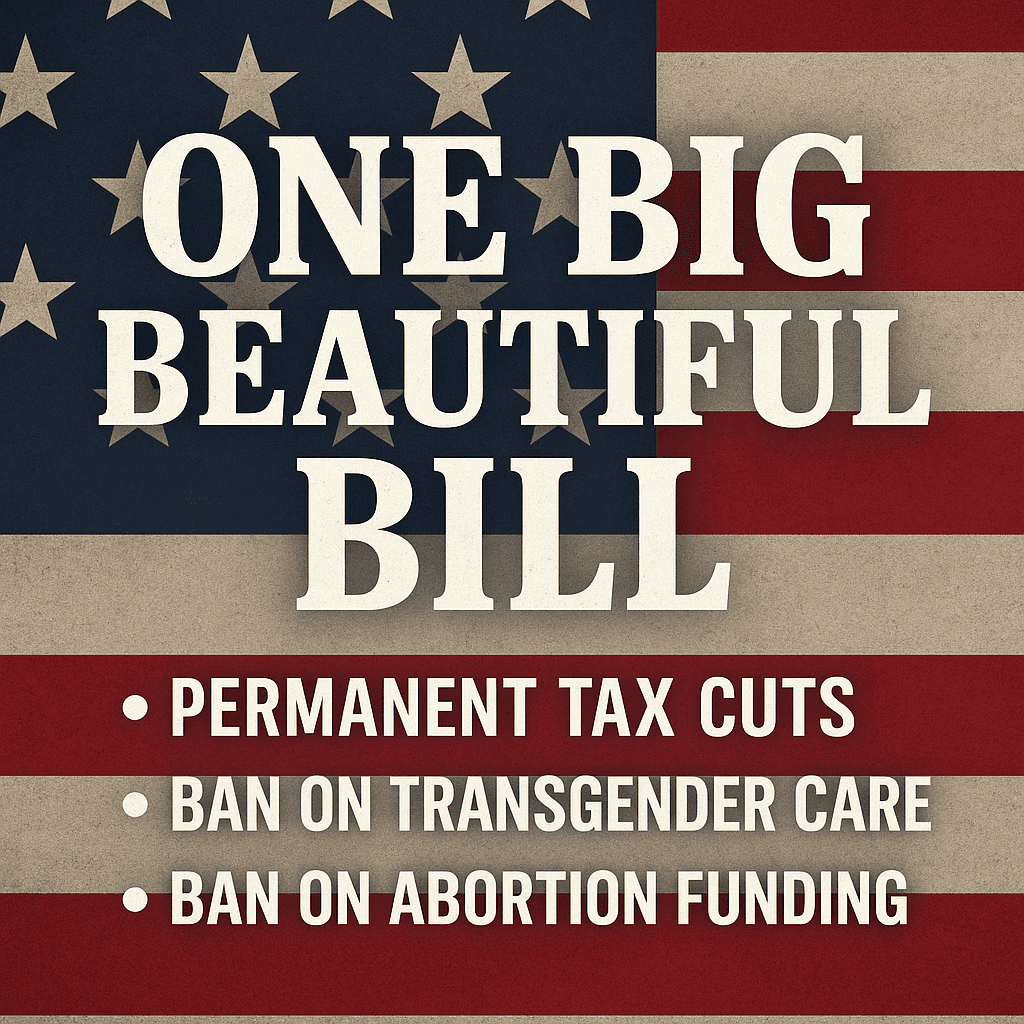
The House just dropped a legislative bombshell with the passage of the “One Big Beautiful Bill,” a sweeping budget and policy overhaul touted by Trump loyalists as the cornerstone of the America First agenda. At over 1,100 pages, it’s more than just a bill—it’s a manifesto. A line in the sand. And while its passage in the House was razor-thin (215-214), the ideological implications are massive.
Let’s be blunt: This bill is a libertarian firestorm, a cultural earthquake, and a fiscal revolution rolled into one. It attempts to reshape not only the way the federal government taxes, spends, and regulates but also how it defines the role of the family, the state, and the individual. As always, we’re here to cut through the noise and break down the core components of this seismic shift.
💰 Tax Cuts: Real Relief or a Mirage?
At the heart of the Big Beautiful Bill is a permanent extension of the Trump-era 2017 tax cuts. This means:
- The individual tax rate reductions aren’t expiring.
- Corporate tax rates stay slashed at their post-2017 levels.
- The standard deduction remains doubled.
But the real kicker? A total elimination of income taxes on tips and overtime pay. That’s a working-class win. It means servers, delivery drivers, and tradespeople who grind for those extra hours are keeping more of what they earn. This is one of the most libertarian features in the bill—no more punishment for working harder.
On top of that, the bill introduces MAGA Savings Accounts: tax-advantaged accounts with a $1,000 federal deposit for every child born between 2025 and 2028. Think of it as a free-market baby bonus. It’s not perfect (it smells a little like redistribution), but if it helps young families build capital, it’s worth watching.
And let’s not overlook the child tax credit increase to $2,500. That’s not just political theater. That’s real money for parents raising kids in an inflation-ravaged economy. This isn’t about dependence—it’s about decentralizing the family’s reliance on government programs while putting tools directly into the hands of the people raising the next generation.
⛔️ Culture War Provisions: Defunding Ideology
Where this bill really turns heads—and turns up the heat—is in its unapologetic cultural stance. It draws hard lines against what it views as state-sponsored moral drift. Let’s start with the big one:
🔜 Nationwide Ban on Federal Coverage of Gender-Affirming Care
Under this bill, Medicaid and CHIP can no longer cover gender-transition treatments for anyone, including adults. That means hormone therapy, puberty blockers, and surgeries are off the table for public funding.
Cue the outrage from the alphabet coalitions and the media machine. But let’s ask the hard question: Should taxpayers be funding irreversible medical procedures that a significant portion of the country believes are ideological, not therapeutic?
This isn’t about banning procedures outright. It’s about removing federal subsidy from controversial interventions that involve long-term consequences and murky science. If adults want it, let the market decide. But keep Uncle Sam out of it.
⛔️ Defunding Abortion Providers
The bill also cuts Medicaid funding to clinics that provide abortions, including Planned Parenthood. This isn’t just red meat for the pro-life base. It’s a return to the principle that taxpayer dollars should never fund the taking of human life.
You want an abortion? The state won’t stop you (yet), but don’t send the bill to people who believe life begins at conception. That’s the libertarian compromise: do what you will, but don’t coerce others into paying for your choices.
🏛️ Medicaid and SNAP Reform: Work or Walk
Another pillar of the bill is the introduction of work requirements for Medicaid recipients. If you’re able-bodied and above the poverty line, you have to either work or participate in job training to receive benefits.
That’s not cruelty. That’s common sense. Dependency is the enemy of liberty. These provisions aim to restore dignity to assistance programs—to turn them from permanent crutches into temporary support beams.
In the same vein, the bill shifts 5% of SNAP (food stamp) costs to states and penalizes high error rates in benefits distribution. That means states now have skin in the game and are incentivized to run tighter, cleaner programs. Local control = more accountability.
🏛️ Border Security & Defense: Dollars for Sovereignty
The bill allocates a jaw-dropping $70 billion for border security, including funding for wall construction, advanced surveillance tech, and 25,000 new Border Patrol agents. It also boosts military spending by $150 billion, funding the Golden Dome missile defense system and unmanned drone fleets.
Critics call it militarism. We call it restoring sovereignty in a world that doesn’t respect open hands. A nation without borders is just a welfare program with a flag.
🎓 Education & Student Loans: Cutting the Cord
The bill tightens Pell Grant eligibility, introduces Workforce Pell for trade school students, and eliminates subsidized student loans for undergrads. Why? Because the college-industrial complex is a scam.
Federal subsidies have bloated tuition and shackled a generation to debt. This bill starts the process of forcing higher ed to earn its value again, instead of leeching it from taxpayers.
❌ Climate Rollbacks: Ending the Green Welfare State
The bill guts clean energy subsidies and green tax credits. It opens up federal lands for oil and gas extraction. The narrative here is simple: let the market innovate, not government cronyism. Wind and solar need to prove themselves without training wheels.
💸 Fiscal Reality: The Debt Ceiling Truth Bomb
Here’s the part that even some Republicans are scared to say out loud: the bill raises the debt ceiling by $4 trillion. That’s not libertarian. But the reality is, if you want to reform entitlements and reshape federal spending, you need room to maneuver.
Yes, the CBO says it could add $3.7 trillion to the national debt over a decade. But the real debt isn’t the balance sheet. It’s the cultural rot and institutional bloat we’re trying to undo. This is a short-term cost for a long-term ideological reset.
Final Thoughts: A Beautiful Mess
The One Big Beautiful Bill isn’t perfect. It’s too bloated, too debt-heavy, and still tied to federal central planning in too many places. But in a political culture addicted to virtue-signaling and symbolic votes, this bill actually does something.
It draws real battle lines.
It empowers families.
It tells the bureaucracy: your days of cultural gatekeeping are numbered.
And it reminds Washington that liberty isn’t a trend—it’s a duty.
More detailed information on this bill
🧾 Key Components of the One Big Beautiful Bill Act
1. Tax Reforms
- Permanent Extension of 2017 Tax Cuts: Makes the individual and corporate tax cuts from the 2017 Tax Cuts and Jobs Act permanent.
- Elimination of Taxes on Tips and Overtime Pay: Removes federal income taxes on tips and overtime earnings.
- Increase in Child Tax Credit: Raises the credit to $2,500 through 2028, then reverts to $2,000.
- SALT Deduction Cap Raised: Increases the state and local tax deduction cap from $10,000 to $40,000 for taxpayers earning under $500,000.
- Introduction of MAGA Savings Accounts: Establishes “Money Accounts for Growth and Advancement” with a $1,000 federal deposit for children born between 2025 and 2028.
- 5% Tax on Remittances: Imposes a tax on money sent abroad, reduced to 3.5% in final negotiations.
- Increased Taxes on University Endowments: Targets large private university endowments with higher taxes.
- Revocation of Tax-Exempt Status: Allows the Treasury to revoke tax-exempt status from nonprofits deemed to support terrorism. Wikipedia+7 Investopedia+7 Investopedia+7 Investopedia+1 AP News+1 Wikipedia+2 Wikipedia+2 AP News+2 AP News+2 Investopedia+2 Wikipedia+2 AP News
2. Healthcare and Social Services
- Medicaid Work Requirements: Introduces work requirements for Medicaid recipients, effective from the end of 2026.
- Increased Medicaid Fees and Verification: Requires higher fees and more frequent eligibility checks for Medicaid recipients above the poverty line.
- Ban on Gender-Affirming Care Coverage: Prohibits Medicaid and CHIP from covering gender-affirming treatments for individuals of all ages.
- Defunding of Abortion Providers: Cuts Medicaid funding to clinics that provide abortions.
- SNAP Program Overhaul: Shifts 5% of benefit costs and 75% of administrative costs to states, with penalties for high error rates. The Guardian+2 Wikipedia+2 Investopedia+2 Them
3. Defense and Border Security
- $150 Billion Increase in Defense Spending: Funds new military initiatives, including unmanned drones and the “Golden Dome” missile defense system.
- $70 Billion for Border Security: Allocates funds for border wall construction, hiring of additional Border Patrol agents, and surveillance technology enhancements. Wikipedia+1 Wikipedia+1
4. Education and Student Loans
- Pell Grant Eligibility Changes: Tightens eligibility requirements and introduces Workforce Pell Grants for trade school students.
- Elimination of Subsidized Student Loans: Ends federal subsidized loans for undergraduate students.
- Restrictions on Department of Education: Removes the Secretary of Education's authority to regulate based on gainful employment metrics. Wikipedia
5. Energy and Environmental Policies
- Rollback of Renewable Energy Incentives: Reduces subsidies and incentives for clean energy initiatives.
- Facilitation of Fossil Fuel Extraction: Eases regulations to allow increased fossil fuel extraction on public lands. Wikipedia AP News
6. Debt and Fiscal Impact
- $4 Trillion Debt Ceiling Increase: Raises the federal debt ceiling to accommodate the proposed spending.
- Projected Increase in National Debt: The Congressional Budget Office estimates the bill could add $3.7 trillion to the national debt by 2034. Wikipedia
📊 Impact Assessment
- Beneficiaries: High-income earners and corporations stand to gain the most from the tax cuts and policy changes.
- Adversely Affected: Low-income individuals may face reduced access to healthcare and food assistance programs due to stringent eligibility requirements and funding cuts.
- Healthcare Coverage Loss: An estimated 7.7 million people could lose Medicaid coverage as a result of the new work requirements.
- Economic Implications: Critics warn of potential job losses and increased energy costs due to the rollback of clean energy incentives and other policy shifts. Investopedia The Guardian
Stay loud. Stay free. Stay Disruptarian.
Related Reads:
- When Fantasy Becomes Ideology: Why Are 5-Year-Olds Pansexual?
- Trans Will Cool Off in 5 Years: A Cultural Correction in Progress
- The One Big Beautiful Bill, Explained
- WHAT THEY ARE SAYING: Pass the One, Big, Beautiful Bill

Spun Web Technology SMART SEO